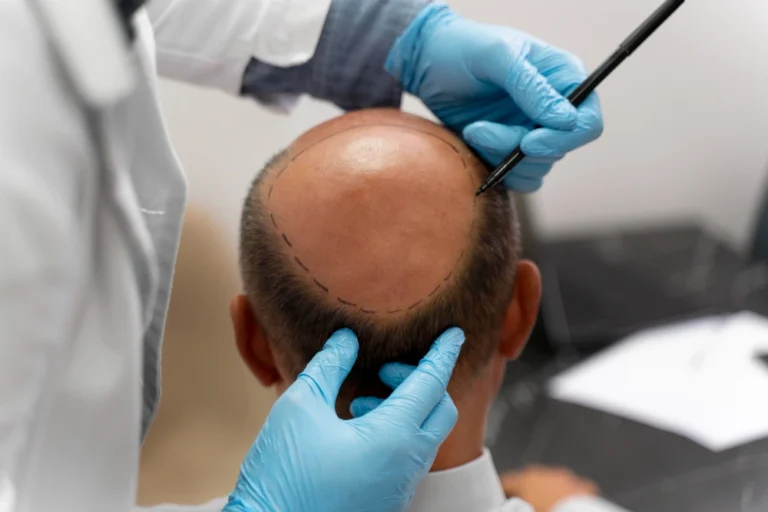
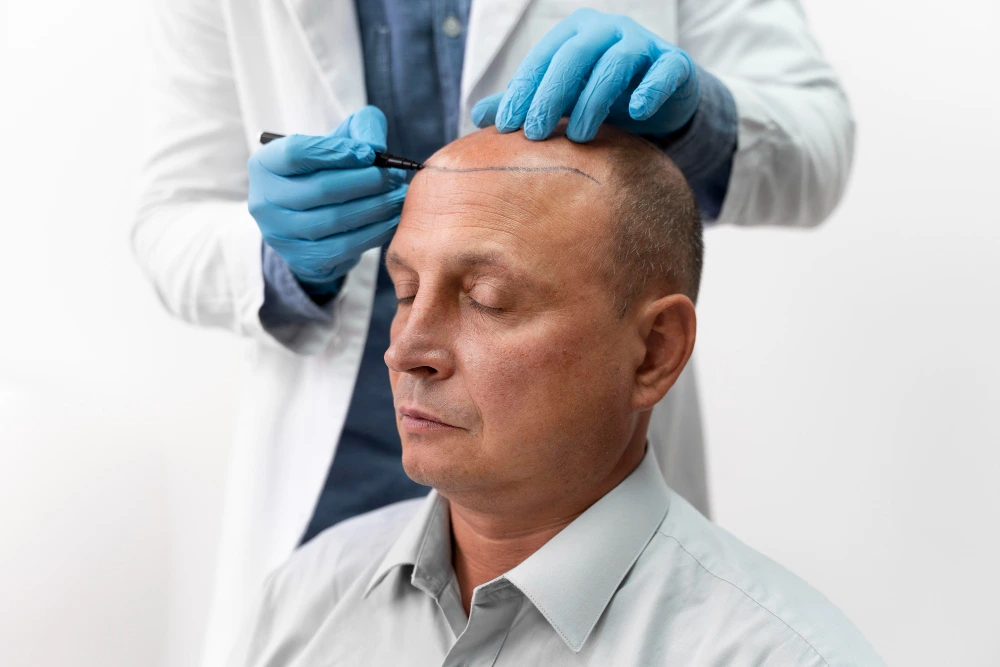
If you’re wondering how to choose a hair transplant clinic, this practical guide walks you through credentials, safety checks, surgeon involvement, pricing transparency, and aftercare—so you can compare clinics confidently and avoid common pitfalls.
Then compare FUE vs FUT hair transplant and, if you’re not ready for surgery, explore Effective Non-Surgical Hair Restoration Methods.
Know someone comparing hair transplant clinics? Share this guide to help them choose safely.
At a Glance (Quick Checklist)
Regulation: Is the clinic registered with the appropriate health authority (e.g., CQC in England)? If not, walk away.
Doctor-led care: Will a licensed physician design, harvest, and supervise your surgery end-to-end? (See ISHRS consumer guidance.)
Credentials: Does the surgeon hold recognized hair-restoration credentials (e.g., ABHRS Diplomate)?
Consultation quality: Was your diagnosis confirmed (dermoscopy ± labs)? Did you discuss non-surgical options first?
Documentation: Clear plan, graft numbers, donor strategy, risks, and aftercare—in writing.
See also: FUE vs FUT • Recovery Guide • Surgeon Selection • Non-Surgical Options
Step 1 — Confirm It’s a Medical Procedure (Not a Sales Pitch)
A hair transplant is surgery (FUE or FUT). Your pathway should begin with an assessment of diagnosis, stability of loss, and medical alternatives—not with discounts or limited-time offers. Reputable medical groups emphasize frank discussion of benefits, limitations, and potential downsides before any commitment. (See Clinic and Surgean Credentials.)
Step 2 — Verify Licensing & Regulation (Country-Specific)
In England, all independent clinics/hospitals offering cosmetic surgery—including hair transplants—must be registered with the Care Quality Commission (CQC). The NHS advises checking the CQC register before booking. Similar regulatory bodies exist in other countries; use the national register where you live.
Tip: Make sure the trading name matches…” → replace the parenthetical with: (See Before You Choose a Hair Transplant Surgeon for role/scope and safety checks.)
Need a printable aid? Download the Clinic Checklist.
Step 3 — Check Surgeon Credentials & Track Record
Look for clear, verifiable credentials and hair-restoration experience—not just general surgery titles.
- Professional memberships: International and national societies offer education and standards (e.g., ISHRS, BAHRS). Membership alone isn’t proof of skill, but it’s a good baseline for ethics and CME.
- Board certification specific to hair restoration: The American Board of Hair Restoration Surgery (ABHRS) recognizes surgeons who pass a rigorous process and exam focused on hair restoration. How to vet training & case volume: Before You Choose a Hair Transplant Surgeon.
- Case volume & scope: Ask how many FUE and FUT procedures the surgeon personally performs yearly and whether they regularly handle cases similar to yours (e.g., advanced loss, repair, afro-textured hair).
Step 4 — Insist On a Doctor-Led Consultation (Not a Coordinator)
The consultation must be with the surgeon who will perform your procedure. The NHS specifically advises meeting the person who will operate and asking standardized questions about training, case numbers, complications, and aftercare.
Ask directly:
Who designs my hairline and donor plan? Compare methods first: FUE vs FUT.
Who harvests grafts, and who places them?
Will you be present the entire day? If not, which parts do you personally do?
(Our “Before You Choose a Hair Transplant Surgeon (Guide)” includes patient questions you can adapt.)
Step 5 — Demand Full Disclosure of Method, Plan & Risks
A safe clinic will detail, in writing:
- Technique: FUE vs FUT (or hybrid), with rationale.
- Donor strategy: safe donor zone mapping, expected graft counts now and long-term. (Not surgical yet? Stabilize loss with Effective Non-Surgical Hair Restoration Methods.)
- Risk discussion: shock loss, scarring (dot vs linear), infection, numbness, poor growth—these should be addressed openly. (Typical timelines and side effects: Hair Transplant Recovery Guide.)
Step 6 — Assess Theatre Standards, Staffing & Graft Handling
Results depend on teamwork and aseptic technique—not just the surgeon.
- Operating setting: regulated, clean, and equipped for sterile procedures (see national regulations/CQC).
- Team composition: What is the experience of the technicians? How are grafts stored (temperature, media) and handled to minimize trauma and desiccation?
- Supervision: A physician should supervise all clinical staff performing any aspect of surgery.
Know who does what on the day: Before You Choose a Hair Transplant Surgeon.
Step 7 — Ask For Real Results (Standardized B&A)
Request standardized, same-angle, same-light photographs taken months apart—ideally with clear timestamps. If possible, ask to see unfiltered close-ups of donor and recipient sites and examples of cases like yours (age, hair characteristics, extent of loss). Patient testimonials are easy to manipulate; standardized imagery and long-term follow-up are more reliable.
When to judge results: Hair Transplant Recovery Guide.
Step 8 — Understand Total Cost, Not Just Price-Per-Graft
The cheapest quote may exclude essentials like aftercare, medications, or touch-ups. The NHS advises asking upfront about costs, including what happens if further treatment is needed. Request an itemized quote and be wary of pressure tactics, deposits that are hard to refund, or opaque pricing tied to “unlimited grafts.”
Compare safely with How to Choose a Hair Transplant Surgeon and use the Clinic Checklist.
Step 9 — Clarify Aftercare, Revisions & Complication Management
- Aftercare plan: who you contact after hours, dressing changes, hair washing schedule, activity restrictions, and follow-up timeline.
- Complications: how the clinic manages infection/folliculitis, donor shock loss, poor growth, or visible scarring.
- Revisions policy: what is covered, and what costs extra?
Sound providers publish clear aftercare routes and contingency plans.
What aftercare looks like week-by-week: Hair Transplant Recovery Guide.
Step 10 — Spot the red flags
- You never meet the surgeon before surgery.
- Heavy sales tactics, big discounts, or “today only.”
- Unclear licensing/registration, or the clinic name doesn’t match the regulator’s register.
- Promises of “scarless” surgery or guaranteed results.
- Outsized role of non-physicians without clear physician supervision.
See the full red-flag list in Before You Choose a Hair Transplant Surgeon.
Before You Book: Download the Clinic Checklist (Free PDF)
See Top-Rated Clinics
Prefer a diagnosis-first approach? Browse neutral, vetted clinics that manage genetic hair loss with medical therapy (and surgery if needed). Filter by credentials, outcomes, and follow-up care. → See top-rated clinics
Hair Enhancement Resources & Guides
- FUE vs FUT Hair Transplant: Which Method Is Right for You? — techniques, scars, recovery, costs & long-term donor strategy.
- Effective Non-Surgical Hair Restoration Methods — evidence-based options to try before/alongside surgery
- How Genetics Influence Hair Loss — what you inherit, myths vs facts, and action steps.
- How to Choose a Hair Transplant Surgeon (Guide) — licensing, credentials, red flags, and aftercare expectations.
- Hair Transplant Recovery Guide — A week-by-week timeline and aftercare tips.
FAQs
Conclusion
Choosing how to choose a hair transplant clinic wisely means treating it like any other surgery: verify regulation, vet the surgeon’s credentials and direct involvement, insist on a written plan and honest risk discussion, and make sure aftercare is robust. Take your time, compare like-for-like, and choose the team you trust to steward your donor hair for life.
Found this useful? Share it to help others learn how to choose a hair transplant clinic safely and confidently.
References
- NHS — Hair Transplant (how to choose, CQC, questions to ask)
- NHS — Choosing who will do your procedure (questions for the surgeon)
- ISHRS — How to find the best hair transplant surgeon
- ISHRS — Find a Doctor & consumer advocacy
- BAHRS — Patient Advice (including surgery abroad & red flags)
- ABHRS — Why ABHRS Certification Matters
Medical Disclaimer: The content on hairimplants.net is for informational purposes only and should not be considered medical advice. It does not replace a professional medical consultation, diagnosis, or treatment. Readers are encouraged to seek guidance from a qualified healthcare provider before making any decisions about hair restoration treatments. Hairimplants.net accepts no liability for actions taken based on the information provided.
Affiliate Disclosure: Hairimplants.net may contain affiliate links. If you click a link and make a purchase, we may earn a small commission at no additional cost to you. This helps us keep our content free and research-based. Our editorial opinions are independent and not influenced by partnerships. We do not accept payment for favorable reviews or rankings. Links to medical sources are non-affiliate.