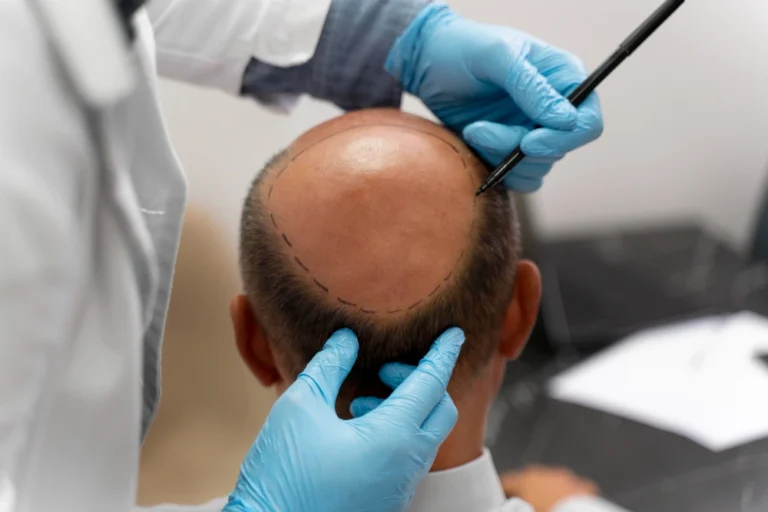
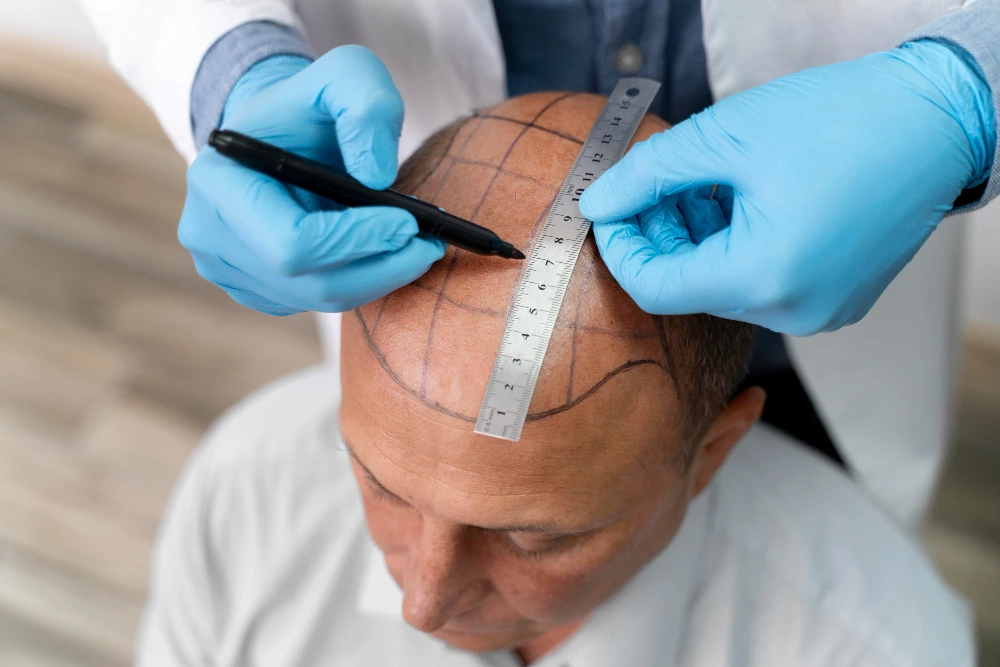
If you’re planning surgery, understanding the hair transplant recovery timeline is half the battle. This guide walks you through the first 14 days, the shedding phase, when regrowth starts, what to avoid, and how to spot issues early—based on reputable medical guidance and real-world surgical protocols.
Know someone recovering from a hair transplant? Share this recovery timeline to help them heal smarter and worry less.
At a Glance (Quick Checklist)
Return to normal life: light desk work in ~3–5 days (many wait a week); avoid impact/sweat for ~10–14 days.
Scabs/pinkness: most scabs shed by day 7–10; mild pinkness can last longer on fair skin.
Shedding: transplanted hairs often shed around weeks 2–6 (normal).
Regrowth starts: around month 3–4 (soft “baby hairs”).
Major cosmetic change: months 6–9.
Final maturation: 12–18 months (beard/body hair may mature on the later end).
Big picture: your surgeon’s aftercare plan beats any generic list—follow their instructions first.
See also: FUE vs FUT • Clinic Guide • Surgeon Selection • Non-Surgical Options
What to Expect: Day 0 to Week 2
Day 0–1 (Surgery day to first night)
- Local anesthesia wears off; mild soreness/tightness is common.
- Recipient area has visible grafts; donor is covered with dressing as advised.
- Sleep slightly elevated (two pillows) to help minimize swelling.
- Use prescribed meds (pain relief/antibiotics if given) exactly as directed.
Days 2–4
- Swelling can peak around the forehead/upper eyelids; usually subsides by day 5–7.
- Begin your clinic’s saline/sterile spray protocol to keep grafts hydrated (if instructed).
- Do not touch/pick scabs. Keep the area clean and protected from dust/knocks/sun.
Days 5–7
- Most clinics allow the first gentle wash around day 3–5; follow their technique (soak, lather in hands, pat—don’t rub; lukewarm water).
- Avoid direct shower pressure on grafts; let water trickle or use a cup to pour.
- Many people feel comfortable returning to desk work now; still avoid sweating/heavy activity.
Days 8–14
- Scabs typically shed naturally by day 10–14 with soaking/soft fingertip “rolling” only if instructed.
- Mild pinkness can linger; use a gentle, fragrance-free shampoo if approved.
- No hats/helmets that press on grafts unless your surgeon allows a loose cap.
- No scratching—itching is normal; a clinic-approved spray or antihistamine (if prescribed) may help
Want week-by-week tips? Bookmark this page and your clinic’s instructions. For clinic-selection safety, see How to Choose a Hair Transplant Clinic.
Weeks 3–12: Shedding & Early Regrowth
- Weeks 2–6: many transplanted hairs shed (telogen “shock” phase). This is expected and not a failure of the surgery.
- Weeks 6–12: the scalp looks similar to pre-op while follicles cycle; recipient skin tone continues to normalize.
Medical context: Shedding reflects the normal hair growth cycle; the follicle remains and will re-enter anagen (growth) after a temporary rest. (See patient overviews from dermatology and transplant societies in References.)
Months 4–12(–18): Thickening & Final Maturation
- Month ~3–4: first new hairs appear—thin, soft, often lighter or kinked.
- Months 6–9: visible bulk; many patients feel camera-confident again.
- Months 10–12: continued caliber gains; styling gets easier.
- Months 12–18: final maturation (especially in crown or if beard/body hair used).
If you’re also starting or continuing medical therapy, see Effective Non-Surgical Hair Restoration Methods to protect non-transplanted hairs during this phase.
Aftercare Essentials (Do/Don’t List)
Do
- Follow your clinic’s regimen (medications, washing, sprays). Their plan considers your procedure details.
- Sleep elevated for the first few nights to reduce swelling.
- Keep it clean: gentle soaks/washes per protocol; pat dry—no rubbing.
- Sun caution: avoid sunburn; use a loose hat if permitted; delay sunscreen on grafts until cleared by your surgeon.
- Nutrition & hydration: eat well, hydrate—your scalp is healing tissue.
- Photo log: take photos every 2–4 weeks—helps track objective progress.
Don’t (typical first 10–14 days unless your surgeon says otherwise)
- No smoking/vaping/alcohol (can impair healing).
- No strenuous exercise (sweat, blood pressure, contact risk).
- No swimming/sauna/steam (infection/irritation risk).
- No hair fibers/sprays/dyes on the recipient until cleared.
- No tight hats/helmets or pressure on grafts.
- No scratching/picking (even if itchy).
Exercise, Work, Sleep & Travel: Safe Timelines
- Work: many return to desk roles by day 3–5; customer-facing roles often wait ~7 days until scabs are gone.
- Exercise:
- Light walking: day 3–5
- Light cardio/weights (no sweat/strain): ~day 10–14
- Full training/contact sports: 3–4 weeks+ (confirm with your surgeon).
- Sleep: back sleeping with head elevated for 3–5 nights helps.
- Travel: avoid dusty/sweaty environments and long sun exposure for ~1–2 weeks; confirm flight timing with your clinic if you had sedation.
Common Side Effects vs. Warning Signs
Common/Expected (short-term):
- Mild swelling, tightness, itching.
- Scabbing and temporary pinkness.
- Numbness/tingling in donor or recipient (typically resolves over weeks).
Contact your clinic promptly if you notice:
- Increasing pain, redness that spreads, warmth, or pus (possible infection).
- Fever or feeling systemically unwell.
- Rapid donor thinning/patches (over-harvesting concerns).
- Any impact/trauma to the grafts within the first 10–14 days.
For diagnosis-first guidance on other causes of shedding (thyroid, iron, stress), read Hormonal & Health-Related Causes and How Genetics Influence Hair Lossin our library.
FUE vs FUT: Does Recovery Differ?
- FUE: often quicker-feeling early recovery; many tiny dot wounds in the donor.
- FUT: a linear donor incision—expect more tightness/ache early; sutures/staples removed per protocol (~7–14 days).
- Recipient-site care is similar for both: protect grafts, gentle washing, avoid friction/sweat early.
Deep dive here: FUE vs FUT Hair Transplant.
Your Recovery Toolkit (print this)
- Prescribed medications and any clinic-provided sprays/solutions
- Gentle, fragrance-free shampoo (only when permitted)
- Neck pillow or extra pillows for head elevation
- Loose cap (only if approved) for short outdoor trips
- Microfiber towel (pat dry)
- Calendar reminders for follow-ups (often at ~3, 6, and 12 months)
See Top-Rated Clinics
Prefer a diagnosis-first approach? Browse neutral, vetted clinics that manage genetic hair loss with medical therapy (and surgery if needed). Filter by credentials, outcomes, and follow-up care. → See top-rated clinics
Hair Enhancement Resources & Guides
- How to Choose a Hair Transplant Clinic — licensing, credentials, red flags, and aftercare expectations.
- FUE vs FUT Hair Transplant: Which Method Is Right for You? — techniques, scars, recovery, costs & long-term donor strategy.
- Effective Non-Surgical Hair Restoration Methods — evidence-based options to try before/alongside surgery
- How Genetics Influence Hair Loss — what you inherit, myths vs facts, and action steps.
FAQs
Conclusion
Stick to your surgeon’s plan, protect the grafts in the first 10–14 days, expect shedding at weeks 2–6, look for early regrowth about month 3–4, and judge results closer to 12–18 months. Revisit this hair transplant recovery timeline when questions pop up, and don’t hesitate to contact your clinic if anything feels off. Found this helpful? Share it to help others navigate recovery with confidence.
Found this helpful? Share it so others can navigate hair-transplant recovery with confidence.
References
- NHS — Hair transplant (patient guide: recovery & risks)
- American Academy of Dermatology — Hair transplant surgery: What to expect
- ISHRS — FUE (Follicular Unit Excision) overview
- ISHRS — FUT (Strip) overview
- BAAPS — Hair transplant surgery (patient information)
Note: Follow your surgeon’s specific aftercare plan if it differs from general guidance above.
Medical Disclaimer: The content on hairimplants.net is for informational purposes only and should not be considered medical advice. It does not replace a professional medical consultation, diagnosis, or treatment. Readers are encouraged to seek guidance from a qualified healthcare provider before making any decisions about hair restoration treatments. Hairimplants.net accepts no liability for actions taken based on the information provided.
Affiliate Disclosure: Hairimplants.net may contain affiliate links. If you click a link and make a purchase, we may earn a small commission at no additional cost to you. This helps us keep our content free and research-based. Our editorial opinions are independent and not influenced by partnerships. We do not accept payment for favorable reviews or rankings. Links to medical sources are non-affiliate.