If you’ve noticed thinning at the part or extra strands in the shower, you’re not alone. This women hair loss guide explains the common patterns, the causes worth checking, and evidence-based options that actually help—so you can talk to your clinician with confidence and build a realistic plan.
Noticing a wider part or extra shedding? Get clear steps—tests, treatments, and timelines.
Quick map (30-Second Overview)
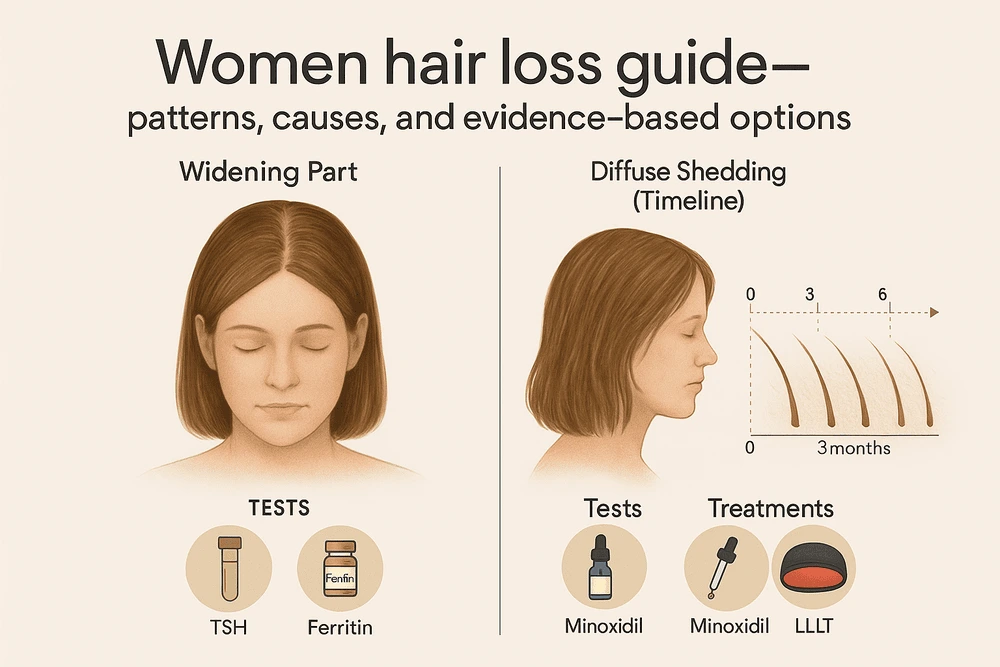
Most common pattern: Female pattern hair loss (FPHL)—widening part and top/crown thinning; hairline usually preserved.
Sudden, diffuse shed: Telogen effluvium (TE) 2–3 months after a trigger (illness, surgery, childbirth, crash diet, new meds).
Patchy round spots: Alopecia areata (AA)—autoimmune; needs dermatologist assessment.
Scalp disease: Dandruff/seborrheic dermatitis can worsen shedding; scarring alopecias need urgent care.
Next steps: Get the pattern right, run targeted labs (thyroid/iron when indicated), start treatments you can keep long term.
New here? Read our deep dives: Common causes of hair loss · Hormonal & health causes · Hair loss prevention routine
© hairimplants.net, 2025. All rights reserved. No unauthorised reproduction.
Recognizing The Pattern (What You See in The Mirror)
Female pattern hair loss (FPHL)
- Look: Widening part, reduced density on the central scalp/crown; ponytail slowly thins.
- Feel: Gradual, chronic; often a family history.
- Why: Follicles become miniaturized due to genetic sensitivity to androgens.
Telogen effluvium (TE)
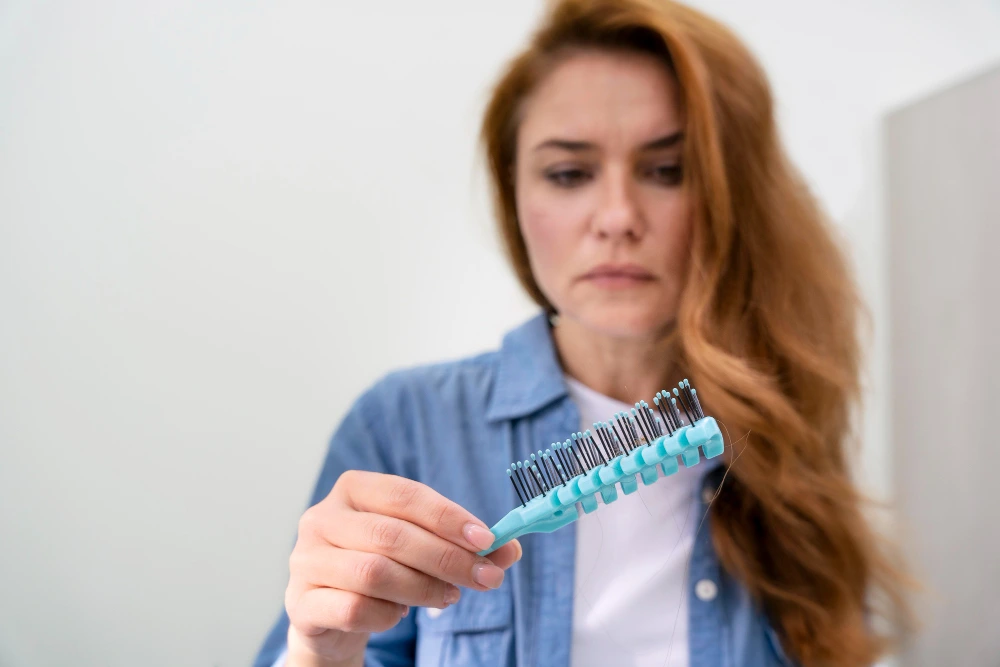
- Look: Even shedding from all over the scalp; handfuls on brush/shower drain.
- Timing: Starts ~2–3 months after a trigger (fever/illness, childbirth, surgery, crash dieting, new meds, major stress).
- Course: Usually self-limited once the trigger is corrected.
Alopecia areata (AA)
- Look: Round/oval patches with smooth skin; brows/lashes may be involved.
- Action: See a dermatologist for confirmation and treatment options.
What Really Causes Shedding in Women (and What to Test)
Use targeted tests guided by your history and exam—skip shotgun panels.
- Thyroid imbalance: Discuss TSH ± Free T4/T3 if you have symptoms (fatigue, cold/heat intolerance, cycle changes) or heavy diffuse shedding.
- Iron deficiency: Ask for ferritin + iron studies + CBC—low stores can magnify TE even without anemia.
- Vitamin D / B12 / zinc: Consider if diet, malabsorption, or symptoms suggest deficiency.
- Medications: Retinoids, some antidepressants/anticonvulsants, anticoagulants, and others can trigger TE—review changes in the last 6 months.
- Hormonal shifts: Postpartum, perimenopause, PCOS—see our Hormonal & health causes hub (link above).
What Works (and When)
For female pattern hair loss (FPHL)
- Topical minoxidil is first-line.
- Women’s 5% foam once daily or 2% solution twice daily (label regimens).
- Expect an early shed in weeks 2–8; visible gains often need 3–6+ months.
- Oral antiandrogens (dermatologist-guided): spironolactone (common), finasteride/dutasteride in selected post-menopausal women (off-label; specialist care).
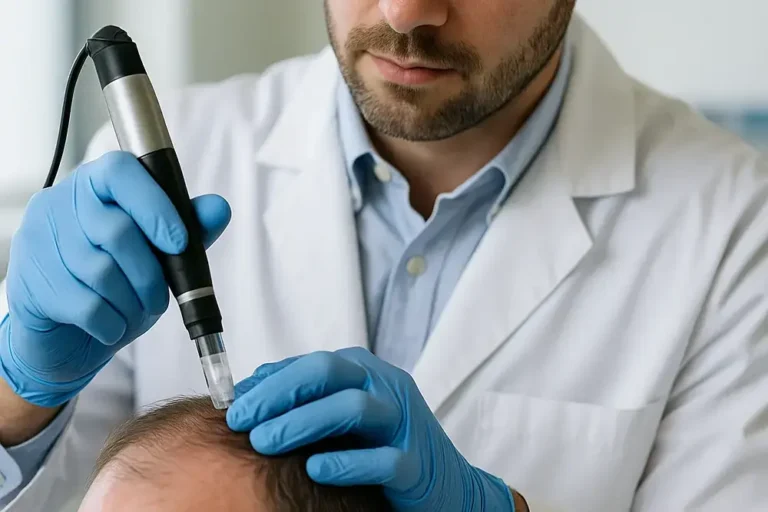
- Adjuncts: Low-level laser therapy (LLLT) 3–4×/week; PRP in selected cases; microneedling (timed away from topicals).
- Surgical option: Hair transplantation for stable, well-selected cases with adequate donor hair—after medical therapy optimizes surrounding density.
For telogen effluvium (TE)
- Identify and correct triggers (illness, thyroid/iron issues, calorie deficit, meds).
- Be patient: Shedding improves over weeks; density follows over months.
- Support: Gentle hair care; consider short-term cosmetic fibers; treat dandruff/inflammation if present.
For alopecia areata (AA)
- Dermatology care: topical/injected corticosteroids; newer systemic options for extensive disease.
Practical routines: Everyday hair care · Daily scalp care
Daily Routine That Actually Helps (No Hype)
- Protect the fiber: Gentle shampoo/condition, limit heat, avoid tight styles, satin/silk pillowcase.
- Care for the scalp: Treat dandruff (anti-dandruff/ketoconazole 1–2%), rinse product buildup, avoid traction.
- Nutrition first: Aim for adequate protein and iron-rich foods; supplement only if a deficiency is confirmed.
- Consistency > intensity: Choose treatments and frequencies you can maintain for 6–12 months.
When to See a Dermatologist
- Patchy loss, scalp pain/itch, scaling, or signs of scarring.
- Shedding that persists >6 months despite fixing likely triggers.
- Rapid progression of pattern changes (widening part/crown).
- To discuss prescription options, PRP, or surgical candidacy.
Realistic Timelines
- 4–8 weeks: Less shedding (TE stabilizes; minoxidil early shed may occur).
- 3–6 months: First visible gains for responders (minoxidil/LLLT/antiandrogens).
- 6–12 months: Best snapshot to judge your plan—adjust with your clinician.
See Top-Rated Clinics
Prefer a diagnosis-first approach? Browse neutral, vetted clinics that manage genetic hair loss with medical therapy (and surgery if needed). Filter by credentials, outcomes, and follow-up care. → See top-rated clinics
Hair Enhancement Resources & Guides
- Common causes of hair loss
- Hormonal and health-related causes
- Hair loss prevention routine
- Everyday hair care routine
- Daily scalp care routine
FAQs: Women Hair Loss Guide
Bottom Line
Women’s hair loss is common—and manageable when you match pattern to cause and choose treatments you’ll keep up with. Start with targeted labs (thyroid, iron when appropriate), build a simple routine, and add evidence-based therapies for pattern loss. With consistent care, this women hair loss guide can be your roadmap from worry to action. See top-rated clinics here.
Was this helpful? Share this women’s hair loss guide with someone who needs clarity.
References
- American Academy of Dermatology (AAD). Hair loss: Diagnosis & treatment.
- AAD. Female pattern hair loss (FPHL): overview & signs.
- AAD. Hair Loss Resource Center.
- StatPearls (NCBI). Telogen Effluvium.
- StatPearls (NCBI). Androgenetic Alopecia.
- StatPearls (NCBI). Alopecia (overview).
- Harvard Health Publishing. Treating female pattern hair loss.
- Harvard Health Publishing. Thinning hair in women: Why it happens and what helps.
- DermNet NZ. Diffuse alopecia.
- DermNet NZ. Iron deficiency.
- DermNet NZ. Seborrhoeic dermatitis (dandruff): causes & treatment.
Medical Disclaimer: The content on hairimplants.net is for informational purposes only and should not be considered medical advice. It does not replace a professional medical consultation, diagnosis, or treatment. Readers are encouraged to seek guidance from a qualified healthcare provider before making any decisions about hair restoration treatments. Hairimplants.net accepts no liability for actions taken based on the information provided.
Affiliate Disclosure: Hairimplants.net may contain affiliate links. If you click a link and make a purchase, we may earn a small commission at no additional cost to you. This helps us keep our content free and research-based. Our editorial opinions are independent and not influenced by partnerships. We do not accept payment for favorable reviews or rankings. Links to medical sources are non-affiliate.