Noticing more strands after a coloring session or heat styling? This guide explains hair coloring breakage vs true hair loss—how to tell the difference at home, when to see a pro, and how to protect your hair and scalp without giving up color.
Dye damage or real shedding? This hair coloring breakage vs true hair loss guide shows how to tell.
Quick Take (30 Seconds)
Breakage ≠ follicle loss. Chemical or heat damage snaps the hair shaft; follicles are still there. True hair loss means fewer follicles producing hair (e.g., female pattern hair loss, alopecia areata, telogen effluvium).
Red flags for true loss: widening part/crown, miniaturized regrowth, patchy bald spots, or shedding that continues beyond 3–6 months after a trigger.
Color safely: Space chemical services, lower developer strength, condition religiously, and minimize heat to prevent cosmetic shedding from breakage.
When in doubt: Do a simple stretch/strand test and a tug/pull test; if pattern changes persist, see a dermatologist.
Keep exploring: Women’s hair loss guide · Everyday hair care routine · Daily scalp care routine
What Counts As “Breakage” From Coloring?
Breakage happens when the hair shaft is weakened by bleaching, permanent dye, relaxers, perms, or repeated heat. You’ll see:
- Short, snapped pieces around the front and crown.
- Frizz halo/flyaways that don’t lie flat even after brushing.
- White dots along the shaft (trichorrhexis nodosa) where fiber is fractured.
- Hair that stretches and snaps easily when wet (over-processed, low strength).
The follicle under the skin is still alive—so this isn’t true medical hair loss. It’s a cosmetic fiber failure that you can prevent and reverse as new, healthier shafts grow out.
What Counts As “True Hair Loss”?
True loss means the follicle output is reduced or interrupted:
- Female/male pattern hair loss (androgenetic alopecia): widening part/top thinning or receding hairline; gradual miniaturization.
- Telogen effluvium (TE): diffuse shed ~2–3 months after a trigger (illness, postpartum, crash diet, new meds); usually self-limited.
- Alopecia areata (AA): round/oval bald patches, smooth skin; autoimmune.
- Scarring alopecias/infections: itching, pain, scaling, or pustules—need urgent dermatology.
At-Home Tests To Tell Breakage From True Loss
1) The Sink Audit (What’s In The Shed?)
- Long hairs with bulbs at one end → normal shed hairs from the root (can increase in TE).
- Short, blunt hairs without bulbs → shaft breakage (color/heat/mechanical).
2) The Stretch/Strand Test (On Clean, Damp Hair)
- Take one strand, pull gently:
- Elastic, then snaps with little force → over-processed, low-strength breakage risk.
- Elastic, returns to length → healthier shaft.
3) The Part-Line Photo Check (Monthly)
- If the part keeps widening under consistent lighting, think pattern loss over time.
4) The Tug/Pull Test
- Gently pull a small bundle; >6 hairs in one pull repeatedly → see a clinician for TE or other causes.
Safe Coloring Rules (So You Can Keep Your Shade)
- Stretch services: Add 2–4+ weeks between bleach/relaxer/color sessions.
- Choose gentler options: Lower volume developer; avoid overlapping bleach on already-lightened lengths.
- Pre-treat & post-treat: Bond builders/plexes during processing and deep conditioners afterward.
- Protein–moisture balance: Use a light protein treatment (weekly/biweekly) plus emollient masks to restore strength and flexibility.
- Turn down the heat: Blow-dry on medium, limit irons to ≤180–200°C (356–392°F), always with heat-protectant.
- Friction control: Wide-tooth comb when wet, blot (don’t rub) with microfiber, sleep on satin/silk.
Daily basics that help: Hair loss prevention routine
When Coloring Unmasks A Real Hair Problem
Color can make thinning more visible—but it doesn’t cause patterned miniaturization. Watch for:
- Widening part/crown see-through despite gentle care → consider FPHL workup.
- Sudden, heavy shed 2–3 months after illness, fever, major stress, surgery, crash diet, or new meds → likely TE layered on top.
- Patchy bald spots or pain/scale → see dermatology promptly.
Targeted labs to discuss (case-by-case):
- TSH ± Free T4/T3 (thyroid imbalance can mimic/compound shedding)
- Ferritin + iron studies + CBC (low stores worsen diffuse shed)
- Vitamin D/B12/Zinc if history suggests deficiency
Read more: Hormonal & health-related causes
Treatment Pathways: Match Fix To Cause
If It’s Mostly Breakage
- Trim damaged ends; space chemical services; hydrate + light protein.
- Protective styling (looser, low-tension).
- Heat holidays and bond-building during/after color.
If It’s Telogen Effluvium (True Shedding)
- Fix the trigger (thyroid/iron, illness recovery, medication review).
- Patience: shedding calms first; density recovers over months.
If It’s Pattern Hair Loss (FPHL/Male Pattern)
- Topical minoxidil (women: 5% foam once daily or 2% solution twice daily; men: 5% twice daily).
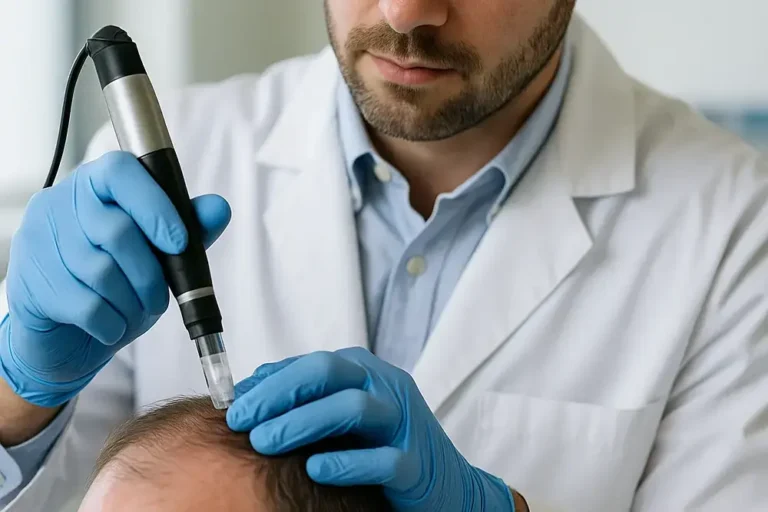
- Consider LLLT, microneedling (timed away from topicals), and—under specialist care—antiandrogens (women) or oral 5-AR inhibitors (men).
- For stable cases with good donor hair: hair transplantation—but only after medical therapy optimizes surrounding density.
How to choose minoxidil format: Minoxidil: Foam vs. Solution
Considering devices? Non-surgical methods
See Top-Rated Clinics
Prefer a diagnosis-first approach? Browse neutral, vetted clinics that manage genetic hair loss with medical therapy (and surgery if needed). Filter by credentials, outcomes, and follow-up care. → See top-rated clinics
Hair Enhancement Resources & Guides
- Women’s hair loss guide
- Everyday hair care routine
- Daily scalp care routine
- Hormonal and health-related causes
- Hair loss prevention routine
FAQ: Hair Coloring Breakage vs True Hair Loss
Bottom Line
Color and heat can break hair shafts; medical conditions reduce follicle output—two different problems that look similar in the shower drain. Use the simple checks above, color more safely, and get targeted labs when shedding won’t settle. With the right plan, hair coloring breakage vs true hair loss becomes easy to tell apart—and easier to fix. See top-rated clinics here.
If this clarified hair coloring breakage vs true hair loss, pass it on—your share could help someone act sooner.
References
- American Academy of Dermatology (AAD). Hair care: Tips for preventing damage and breakage.
- AAD. Hair loss: Diagnosis & treatment.
- DermNet NZ. Trichorrhexis nodosa (hair shaft fracture).
- DermNet NZ. Diffuse alopecia.
- StatPearls (NCBI). Telogen Effluvium.
- Harvard Health Publishing. It’s not too late to save thinning hair.
Medical Disclaimer: The content on hairimplants.net is for informational purposes only and should not be considered medical advice. It does not replace a professional medical consultation, diagnosis, or treatment. Readers are encouraged to seek guidance from a qualified healthcare provider before making any decisions about hair restoration treatments. Hairimplants.net accepts no liability for actions taken based on the information provided.
Affiliate Disclosure: Hairimplants.net may contain affiliate links. If you click a link and make a purchase, we may earn a small commission at no additional cost to you. This helps us keep our content free and research-based. Our editorial opinions are independent and not influenced by partnerships. We do not accept payment for favorable reviews or rankings. Links to medical sources are non-affiliate.