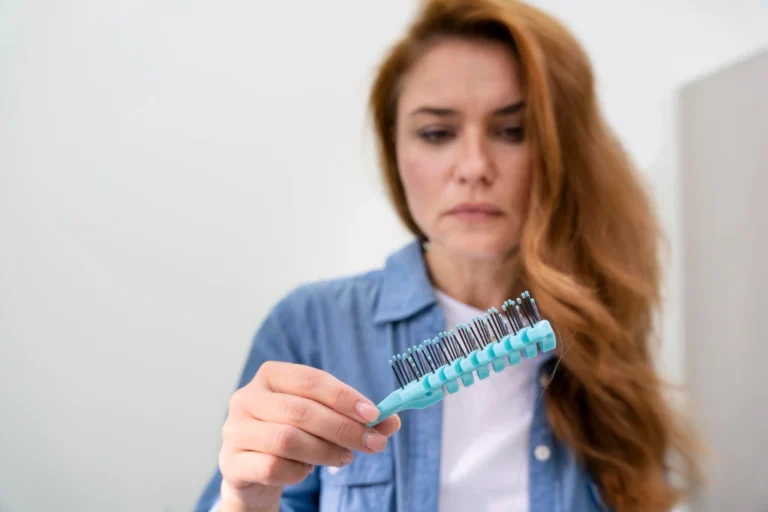

Worried your new prescription is behind a sudden shed? This guide explains how medications causing hair loss can trigger telogen effluvium (TE), the tell-tale signs to look for, the most implicated drug classes, and practical next steps with your clinician.
Wondering about medications causing hair loss? This checklist explains triggers, timing, and tests—share to help someone.
Quick Take
Drug-induced TE is usually temporary and diffuse. Shedding typically appears 1–3 (up to 6) months after the trigger and settles once the culprit is removed or corrected.
Common medication culprits: anticoagulants (e.g., heparin, warfarin, DOACs), beta-blockers/ACE inhibitors, retinoids (vitamin A derivatives), anticonvulsants (valproate, carbamazepine), lithium and other antidepressants/mood stabilizers, antithyroid drugs, and more.
Chemotherapy is different. It causes anagen effluvium (rapid loss within weeks) rather than TE.
Good prognosis: With time and trigger reversal, hair generally regrows; manage expectations—visible improvement often takes 3–6+ months.
See also:Stress & Lifestyle Triggers • Hormonal & Health Causes • Genetics & Hair Loss • Common causes of hair loss
What Telogen Effluvium Looks Like
TE is a diffuse (overall) shed rather than a receding hairline or widening part. Many notice more hair on the brush/shower drain and a thinner ponytail. TE occurs when a stressor (including drugs) pushes follicles from growth (anagen) into resting (telogen); the shed then shows up months later due to the hair cycle’s lag.
The Main Drug Classes Linked to TE (with examples)
Always discuss changes with your prescriber first—some medications are lifesaving, and alternatives may exist.
1) Anticoagulants (blood thinners)
Examples: heparin, warfarin; DOACs (rivaroxaban, dabigatran, apixaban—reported).
2) Antihypertensives
Beta-blockers and ACE inhibitors have been associated with TE in some patients.
3) Retinoids / excess vitamin A
Isotretinoin, acitretin; high vitamin A intake can precipitate TE.
4) Anticonvulsants
Valproate (dose-dependent), carbamazepine, phenytoin.
5) Psychotropics
Lithium and various antidepressants have been reported. (Incidence varies by agent.)
6) Antithyroid drugs
Propylthiouracil and others—TE can appear during treatment of hyperthyroidism.
7) Other reported classes
HRT/OC pills/androgens (during/after changes), interferons, cholesterol-lowering agents, some anti-infectives, NSAIDs, levodopa, allopurinol.
8) Chemotherapy (anagen effluvium)
Cytotoxic agents (e.g., alkylators, antimetabolites, mitotic inhibitors) cause rapid shedding within weeks of initiation—different mechanism and timeline than TE.
TE can also follow serious drug eruptions (e.g., SJS/TEN or hypersensitivity syndromes), with shedding weeks–months after the acute illness.
Timing, Dose, and Pattern—How to Spot a Medication Trigger
- Onset: Often ~3 months after starting, stopping, or changing a dose; range 1–6 months.
- Pattern: Diffuse, non-scarring loss; scalp otherwise looks healthy.
- Dose relation: Some drugs show dose-dependent risk (e.g., valproate).
- Confounders: Illness, surgery, iron deficiency, crash dieting, thyroid imbalance can overlap with medication timelines and amplify shedding.
What to Do (Without Derailing Necessary Treatment)
- Don’t stop essential meds on your own. Bring a timeline (started/stopped/changed in last 6 months) to your clinician. A trial dose reduction or switch may be considered if safe.
- Rule out common co-triggers: Targeted labs often include TSH ± Free T4/T3 and ferritin/iron studies when shedding is heavy or prolonged.
- Expect lagged recovery: After removing the trigger, shedding can continue for weeks; regrowth usually shows within 3–6 months, with cosmetic density improving up to 12+ months.
- Gentle hair care while you wait: Normal washing/brushing; avoid tight styles/harsh heat.
- When to see a dermatologist: Patchy loss, scalp symptoms, or persistent shedding >6 months; to distinguish TE from androgenetic alopecia or alopecia areata and discuss options like topical minoxidil for selected cases.
Deep dives: Hormonal and health-related causes and How genetics influence hair loss
Tests & Documentation Checklist (Bring to Your Appointment)
- Medication timeline (start/stop/dose changes, incl. OTC/supplements) covering the prior 6 months.
- Photos (same lighting/angles monthly).
- Labs (case-by-case): TSH ± Free T4/T3, ferritin/iron, complete blood count; others only if history/exam suggests.
See Top-Rated Clinics
Prefer a diagnosis-first approach? Browse neutral, vetted clinics that manage genetic hair loss with medical therapy (and surgery if needed). Filter by credentials, outcomes, and follow-up care. → See top-rated clinics
Hair Enhancement Resources & Guides
- Common causes of hair loss
- Stress & Lifestyle Triggers for Hair Loss
- Hormonal & Health-Related Causes of Hair Loss
- How Genetics Influence Hair Loss
- Thyroid and Hair Loss: Symptoms & What to Test
FAQs: Medications Causing Hair Loss
Bottom Line
Most cases of drug-related shedding are temporary. Work with your clinician to map a 6-month medication timeline, rule out overlapping triggers (thyroid, iron, illness, crash diets), and—only if safe—adjust the suspected medication. Be patient with regrowth timelines. With a thoughtful plan, medications causing hair loss don’t have to be a mystery—identify the trigger, correct it, and track progress over months, not days.
Was this useful? Share this medications causing hair loss guide with someone mapping their med timeline.
References
- DermNet NZ — Alopecia from drugs. Causes, timing (TE 2–4 months), implicated classes, diagnosis & management. Updated 2025.
- StatPearls (NCBI) — Telogen Effluvium. Triggers (including medications), onset window 1–6 months, evaluation and prognosis. Updated May 2024.
- DermNet NZ — Anagen Effluvium. Mechanism and rapid timeline during chemotherapy.
- StatPearls (NCBI) — Anagen Effluvium. Chemotherapy classes implicated. Updated 2024.
- Harvard Health Publishing — Hair loss A-to-Z. Medication and toxin categories that can cause hair loss. Updated 2024.
- American Academy of Dermatology (AAD) — Hair loss: Diagnosis & treatment. Importance of correct diagnosis and dermatologist care pathway.
Medical Disclaimer: The content on hairimplants.net is for informational purposes only and should not be considered medical advice. It does not replace a professional medical consultation, diagnosis, or treatment. Readers are encouraged to seek guidance from a qualified healthcare provider before making any decisions about hair restoration treatments. Hairimplants.net accepts no liability for actions taken based on the information provided.
Affiliate Disclosure: Hairimplants.net may contain affiliate links. If you click a link and make a purchase, we may earn a small commission at no additional cost to you. This helps us keep our content free and research-based. Our editorial opinions are independent and not influenced by partnerships. We do not accept payment for favorable reviews or rankings. Links to medical sources are non-affiliate.