
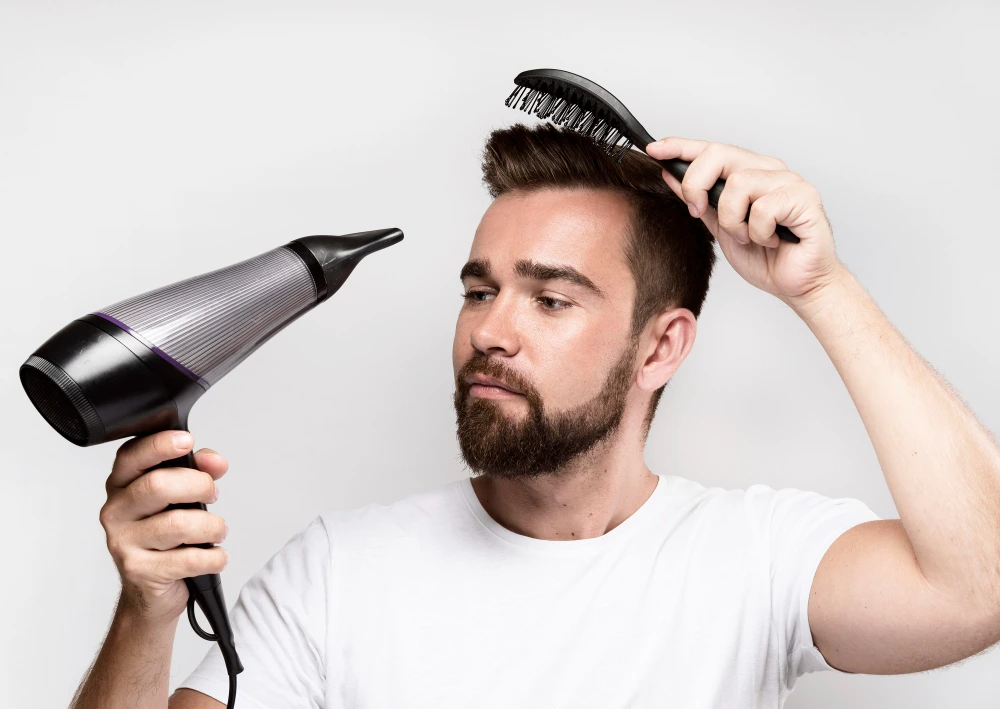
If you’re noticing extra strands in the shower, a consistent everyday hair care routine to prevent hair loss can make a real difference. Below you’ll find a simple, dermatologist-aligned plan you can start today—no fads, just habits that protect follicles, reduce breakage, and support thicker-looking hair over time.
Know someone noticing extra shedding? Share this everyday hair care guide to help them reduce breakage and support healthier regrowth.
At a Glance (Quick Checklist)
Shampoo 2–4×/week (adjust to scalp oiliness) with a gentle, fragrance-light formula.
Conditioner every wash; detangle with a wide-tooth comb from ends → roots.
Limit tight styles, high heat, and frequent bleaching/straightening.
Sleep, nutrition, iron status, and stress management matter for shedding.
Get a proper diagnosis first if shedding is new, sudden, patchy, or persistent.
See also:Daily Scalp Care Routine • Non-Surgical Methods • Minoxidil Men and Women
Watch: 5-Minute Daily Routine (Video)
What you’ll learn in the video: a quick wash-day workflow, low-tension styling, and heat-smart finishing that protect length and reduce mechanical damage.
The Foundation: Scalp-First Care
1) Choose the right wash cadence
- Oily or flaky scalp: aim for 3–4×/week with a gentle shampoo.
- Dry/curly/coily hair: 2–3×/week is often enough; co-wash on non-shampoo days if it suits your hair.
Medical basics: A clean, comfortable scalp supports healthy growth cycles. See Common Causes of Hair Loss
2) Gentle shampoo technique
- Use lukewarm water; hot water lifts cuticles and dries the scalp.
- Massage with fingertips (not nails) for 30–60 seconds; rinse thoroughly.
- If using an anti-dandruff shampoo (zinc pyrithione, ketoconazole, selenium sulfide), leave it on the scalp 2–3 minutes before rinsing, 2–3×/week as directed.
3) Condition every wash
- Apply mid-lengths to ends; leave 2–5 minutes.
- For fragile hair, consider a weekly deep conditioner or bond-building mask to reduce breakage.
Breakage-Proof Styling (Daily)
Detangling (do this)
- On wet hair, wide-tooth comb, a little conditioner or leave-in, start at ends → roots.
- Blot with a microfiber towel or soft T-shirt—no rough rubbing.
Heat (limit this)
- Keep blow-dryer on warm, not hot; finish with cool shot.
- If heat-styling, heat protectant first; cap temps around 150–175°C / 300–350°F when possible; fewer passes.
Hairstyles (protect tension)
- Rotate styles; avoid tight ponytails, slick buns, braids with heavy extensions, and constant helmet/turban pressure.
- At night, a silk/satin pillowcase or bonnet reduces friction and morning shed.
Early traction alopecia is often reversible if you reduce tension now. See our guide: Stress & Lifestyle Triggers.
Everyday Nutrition & Lifestyle That Support Hair
- Protein target: include protein at each meal (eggs, legumes, dairy, fish, lean meats, tofu/tempeh).
- Iron & ferritin: iron deficiency is a common shedding driver—test and correct under clinician guidance.
- Sleep & stress: regular sleep and daily light activity help normalize stress physiology that can drive telogen effluvium.
- Quit smoking: associated with poorer hair health and higher risk of pattern hair loss.
Deep dives: Hormonal & Health-Related Causes of Hair Loss and How Genetics Influence Hair Loss
Build Your Daily + Weekly Routine (Copy/Paste)
Daily (5–10 minutes)
- AM/PM: gentle scalp massage (30–60s) with fingertips.
- Detangle smart: wide-tooth comb + leave-in; ends → roots.
- Style: low-tension updo or loose style; heat only if needed (with protectant).
Wash Days (2–4×/week)
- Shampoo scalp (lukewarm), fingertip massage.
- Condition mid-lengths→ends (2–5 min).
- Rinse cool, blot—not rub.
- Leave-in + heat protectant if drying.
- Dry on warm; cool shot to finish.
Weekly / Bi-Weekly
- Deep conditioner or bond-builder mask.
- Clarify product build-up as needed (not more than 1–2×/month for dry hair).
When Everyday Care Isn’t Enough
If shedding is sudden, patchy, painful, scaly, or persists >6 months, get a diagnosis first (dermoscopy ± labs). Once you know the cause, match the fix:
- Stress/illness/crash dieting → TE: correct the trigger; consider topical minoxidil short-term to speed recovery.
- Pattern hair loss (AGA/FPHL): discuss medical therapy and long-term plan.
- Interested in surgery? Compare methods and vet providers carefully.
See Top-Rated Clinics
Prefer a diagnosis-first approach? Browse neutral, vetted clinics that manage genetic hair loss with medical therapy (and surgery if needed). Filter by credentials, outcomes, and follow-up care. → See top-rated clinics
Simple Product Checklist
- Gentle shampoo (fragrance-light)
- Conditioner + weekly deep conditioner
- Wide-tooth comb + microfiber towel
- Heat protectant
- Silk/satin pillowcase or bonnet
Hair Enhancement Resources & Guides
- Stress & Lifestyle Triggers for Hair Loss
- Hormonal & Health-Related Causes of Hair Loss
- How Genetics Influence Hair Loss
- Effective Non-Surgical Hair Restoration Methods
- FUE vs FUT Hair Transplant: Which Method Is Right for You?
- How to Choose a Hair Transplant Clinic
- Before You Choose a Hair Transplant Surgeon
- Hair Transplant Recovery Guide
FAQs — Everyday Hair Care
Conclusion
A smart everyday hair care routine to prevent hair loss is about consistent, gentle habits: clean and comfortable scalp, conditioned lengths, low-tension styles, careful heat, steady nutrition, and good sleep. If shedding persists or looks patchy/scaly, get a diagnosis first—then layer medical or non-surgical options as needed. Small steps, repeated daily, are what protect density over time.
Found this useful? Share it to help someone build a healthier hair routine today.
References
- American Academy of Dermatology — Everyday hair & scalp care
- American Academy of Dermatology — Hair loss: overview & patient guidance
- NHS — Hair loss: causes, when to seek help, treatments
Medical Disclaimer: The content on hairimplants.net is for informational purposes only and should not be considered medical advice. It does not replace a professional medical consultation, diagnosis, or treatment. Readers are encouraged to seek guidance from a qualified healthcare provider before making any decisions about hair restoration treatments. Hairimplants.net accepts no liability for actions taken based on the information provided.
Affiliate Disclosure: Hairimplants.net may contain affiliate links. If you click a link and make a purchase, we may earn a small commission at no additional cost to you. This helps us keep our content free and research-based. Our editorial opinions are independent and not influenced by partnerships. We do not accept payment for favorable reviews or rankings. Links to medical sources are non-affiliate.
