Choosing between foam and liquid can feel harder than it should. This guide compares minoxidil foam vs solution—how they differ, who benefits from each, how often to use them (men vs women), and smart tips to improve results while avoiding irritation.
Minoxidil foam vs solution — what’s different, who should use which, and how to apply. Share this guide.
Quick Take
Both work. Foam and solution deliver minoxidil to follicles and can slow loss and increase density when used consistently.
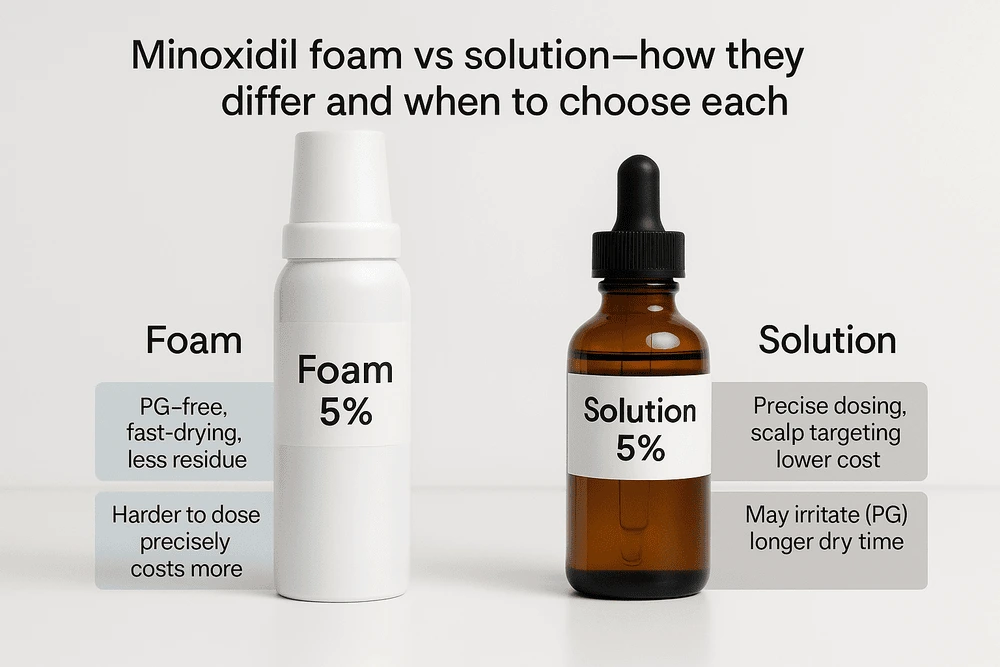
Key difference: The solution contains propylene glycol (PG), which helps penetration but commonly causes itch/flaking. Foam is PG-free, often better for sensitive scalps.
Dosing (typical label directions):
Men: 5% foam twice daily or 5% solution twice daily.
Women: 2% solution twice daily or 5% foam once daily (FDA-approved regimen).
Expectations: Early shedding in weeks 2–8 is common; visible gains usually need 3–6+ months.
Where it shines: Best for androgenetic alopecia (pattern hair loss). It’s not a fix for sudden diffuse shedding triggers (iron/thyroid/meds)—diagnose first.
See also:Everyday hair care routine · Daily scalp care routine · Non-surgical methods
© hairimplants.net, 2025. All rights reserved. No unauthorised reproduction.
What’s Inside: Foam vs Solution
Solution (liquid dropper)
- Vehicle: Alcohol + propylene glycol (PG) + water.
- Pros: Precise 1 mL dosing with a dropper; easy to part hair and place on scalp; usually cheaper; widely available in 2% and 5%.
- Cons: PG can cause itch, redness, flaking; greasier look and longer dry time; can affect styling.
Foam (aerosol mousse)
- Vehicle: PG-free; fast-evaporating alcohol base that turns to foam.
- Pros: Less irritation for many, dries faster, less residue, better tolerated under hats/helmets; once-daily 5% option for women.
- Cons: Harder to measure precisely; can be tricky to reach the scalp under very dense or tightly curled hair without technique; typically costs more.
Men vs Women: How Often To Use It
Always follow your product label and your clinician’s advice.
- Men (pattern hair loss):
- 5% solution: 1 mL twice daily.
- 5% foam: half a capful twice daily.
- Either form can work; choice is comfort/irritation/cost.
- Women (pattern hair loss):
- 2% solution: 1 mL twice daily, or
- 5% foam: half a capful once daily (women’s label).
- Some clinicians individualize plans, but stick to approved regimens unless advised otherwise.
New here? Learn the basics: Hair Loss Prevention Routine · Daily Scalp Care Routine
Which one should I choose?
Use this practical match-up:
- You have a sensitive/itchy scalp or dandruff flares with liquids → choose foam.
Foam is PG-free, so it’s often better tolerated. Pair with an anti-dandruff routine if needed (see our scalp care article). - You want precise placement under longer hair → solution can be easier.
A dropper lets you part and dot the scalp (not hair) in rows. - You need speed/minimal residue → foam.
It dries faster and interferes less with styling, helmets, or workouts. - You’re budget-conscious → solution is usually cheaper.
Many patients stay adherent because the monthly cost is lower. - You’re a woman seeking a once-daily regimen → 5% foam once daily.
This approved schedule improves adherence for many.
How to Apply (and Actually Reach The Scalp)
General rules
- Start with a dry scalp.
- Apply to the skin, not the hair.
- Use the labeled amount (1 mL solution or half-cap foam).
- Spread with fingertips, then wash hands.
- Let dry 2–4 hours before bed to avoid transfer.
Solution tips
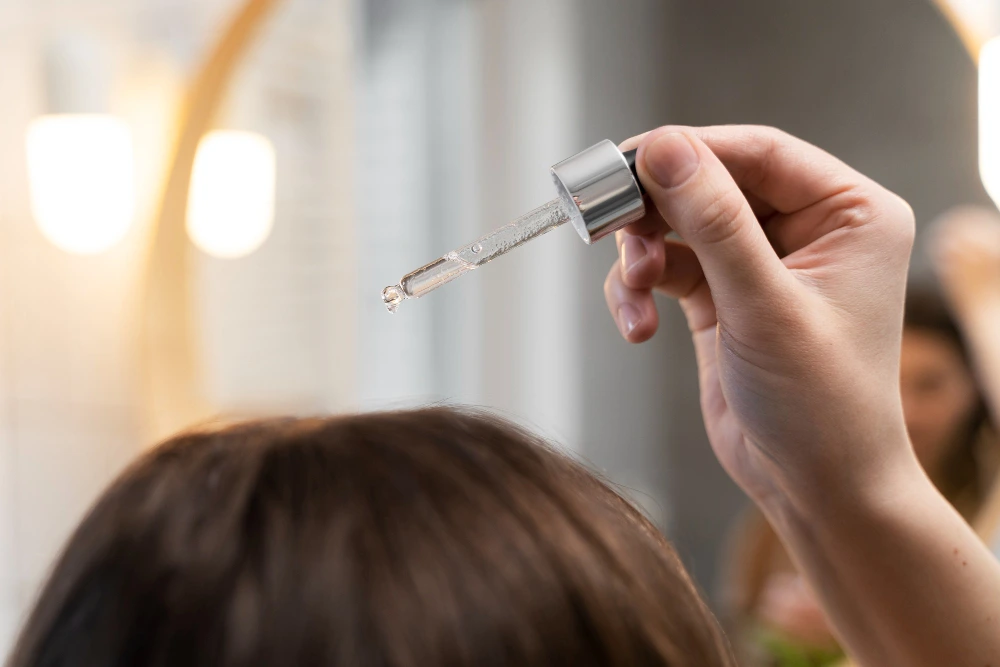
- Part hair in several lines, drip small amounts along the part, then massage in.
- If you see liquid running, you’re using too much per spot.
Foam tips
- Dispense half a cap onto your fingertips, not the scalp (foam collapses on warm skin).
- Work in sections: front, mid-scalp, crown. Re-dispense as needed.
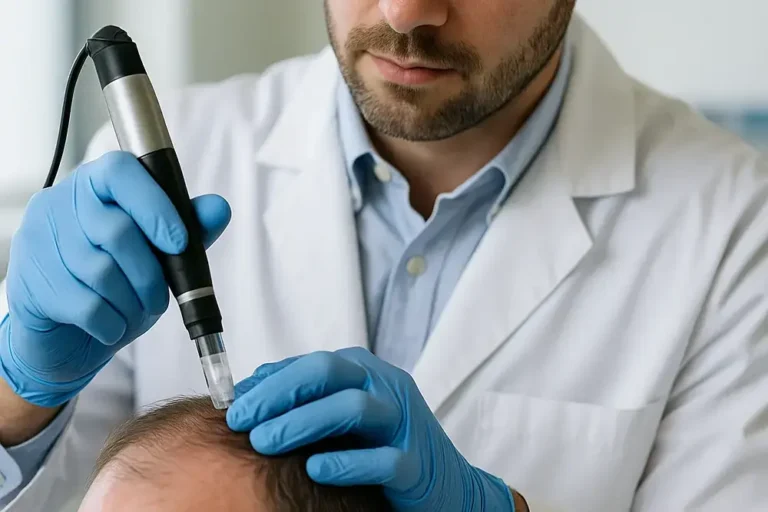
Considering microneedling? Many clinicians separate minoxidil by 24–48h around needling to reduce irritation. See: Microneedling for Hair: How Often & Needle Size
Side Effects & Safety
- Common: Temporary shedding early on, scalp irritation, dryness/flaking (more with solution/PG), unwanted facial hair if product drips to the face.
- Less common: Contact dermatitis; rare systemic effects (palpitations, dizziness). Stop and seek care if this occurs.
- Pregnancy/Breastfeeding: Avoid in pregnancy. During breastfeeding, many sources advise caution and individualized risk–benefit discussion; topical exposure is low but decisions are personal—ask your clinician.
- Color/perm services: Apply after services; wait until scalp is calm if irritated.
- Beard/brows: Off-label and should be physician-guided.
Styling & Routine Hacks (to Stay Consistent)
- Morning foam, evening solution (or vice-versa) if you’re sensitive to one vehicle.
- Let it dry before styling products or LLLT devices.
- Set phone reminders and take monthly photos in the same lighting to track progress.
- Combine with LLLT or PRP under supervision if you need extra help: Non-surgical Methods
Cost, Convenience & Adherence
- If irritation makes you quit, a cheaper bottle isn’t a win. Many long-term users pick foam for comfort even if it costs more.
- If budget is tight and your scalp tolerates it, solution is perfectly fine and effective.
- Buy 3-month supplies once you’re tolerating the product; results take time.
See Top-Rated Clinics
Prefer a diagnosis-first approach? Browse neutral, vetted clinics that manage genetic hair loss with medical therapy (and surgery if needed). Filter by credentials, outcomes, and follow-up care. → See top-rated clinics
Hair Enhancement Resources & Guides
- Everyday hair care routine
- Daily scalp care routine
- Non-surgical methods
- Hair loss prevention routine
- Microneedling for Hair: How Often & Needle Size
FAQ: Minoxidil Foam vs Solution
Bottom Line
Both forms can work—your best pick is the one you’ll use every day. If you’re sensitive or want a clean finish, foam often wins. If you need precision and lower cost, solution is a solid choice. For men, use 5% twice daily; for women, 2% solution twice daily or 5% foam once daily. Pair with good scalp care and give it 3–6+ months. With the right choice and consistency, minoxidil foam vs solution becomes a practical decision—not a guessing game.
Was this useful? Share this minoxidil foam vs solution guide with someone starting treatment.
References
- American Academy of Dermatology (AAD). Hair loss: Diagnosis and treatment
- AAD. Hair loss: Overview
- AAD. Female pattern hair loss: signs & treatment
- AAD. Male pattern hair loss: treatment
- Cochrane. Treatments for female pattern hair loss
- Cochrane (trials db). Randomized trials of topical minoxidil for AGA in men
- DailyMed (NIH). Minoxidil 5% Topical Solution — Drug Label (men)
- DailyMed (NIH). Minoxidil 5% Topical Solution — general consumer label
- Harvard Health Publishing. Hair loss (A-to-Z)
Medical Disclaimer: The content on hairimplants.net is for informational purposes only and should not be considered medical advice. It does not replace a professional medical consultation, diagnosis, or treatment. Readers are encouraged to seek guidance from a qualified healthcare provider before making any decisions about hair restoration treatments. Hairimplants.net accepts no liability for actions taken based on the information provided.
Affiliate Disclosure: Hairimplants.net may contain affiliate links. If you click a link and make a purchase, we may earn a small commission at no additional cost to you. This helps us keep our content free and research-based. Our editorial opinions are independent and not influenced by partnerships. We do not accept payment for favorable reviews or rankings. Links to medical sources are non-affiliate.