
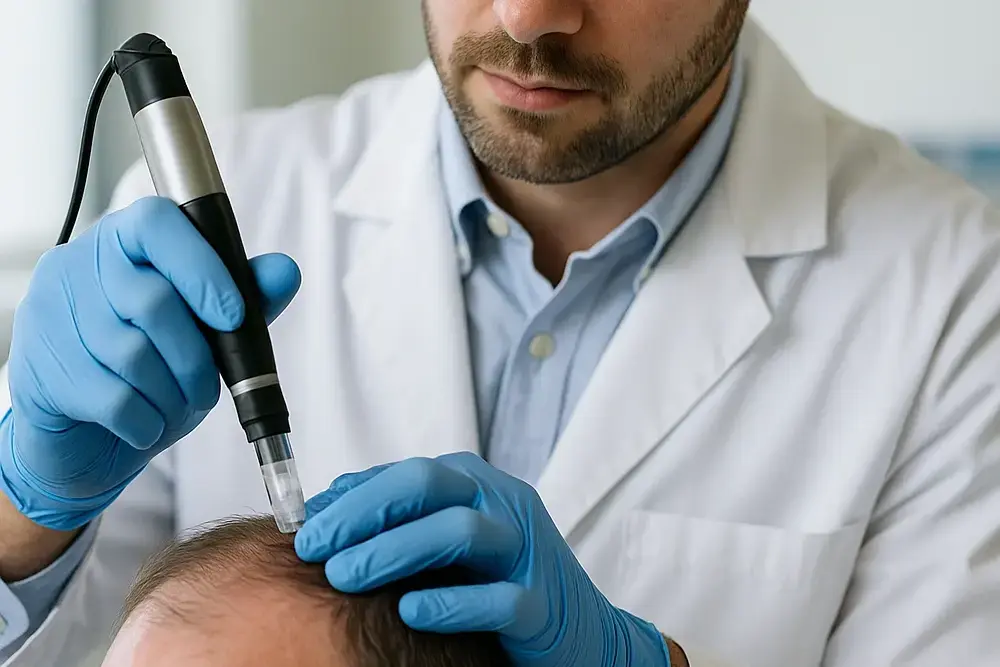
Curious about whether tiny needles can actually help? This guide distills what trials and reviews say about microneedling hair growth—which needle sizes were used, how often sessions worked best, what to combine it with, and how to stay safe.
Ready to try microneedling hair growth? See the safest routine and share with a friend.
Key Takeaways (Evidence in Brief)
Works best as a combo: Adding microneedling to 5% topical minoxidil improved hair counts versus minoxidil alone in multiple studies and meta-analyses.
Needle size used in studies: Most AGA trials used ~1.0–1.5 mm in clinic, typically weekly or every 1–2 weeks. Newer analyses suggest sub-1 mm depths may also be effective when paired with minoxidil across ~12 weeks.
Home vs clinic: Clinic microneedling uses medical devices at controlled depths (often ≥1.0 mm). At-home rollers/pens are generally shorter (0.25–0.6 mm) and should be used less aggressively with strict hygiene; evidence for optimal home protocols is limited.
Great expectations: Visible gains typically need 3–6+ months of consistent therapy; stick with your routine and photos to track progress.
See also:Everyday hair care routine · Daily scalp care routine · Non-surgical methods
What Is Microneedling and How Does It Work?
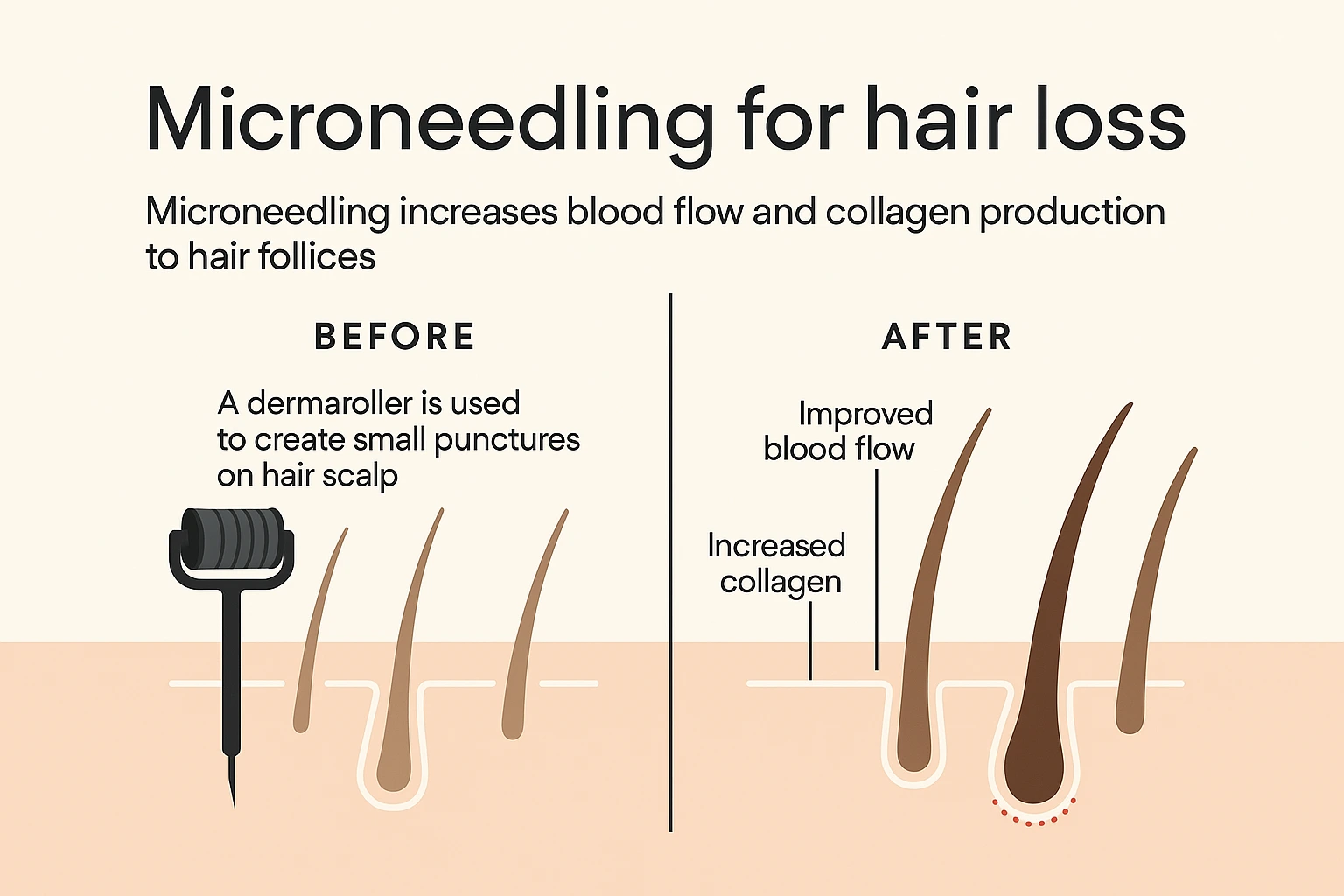
Microneedling is a minimally invasive technique that uses fine, sterile needles to create controlled micro-channels in the skin. This prompts a predictable wound-healing cascade—more collagen, elastin, and new skin cells.
On the scalp, the same mechanism acts around hair follicles, supporting a healthier micro-environment that can complement microneedling hair growth plans (especially alongside minoxidil under clinician guidance).
Plain-English summary: tiny needles → brief, controlled “injury” → the body repairs → scalp tissue quality improves → follicles may perform better.
© hairimplants.net, 2025. All rights reserved. No unauthorised reproduction.
How Does Microneedling Work for Hair Growth?
The scalp’s response helps explain why microneedling hair growth often works best as part of a combined routine:
Wound-healing activation
Microneedling triggers the skin’s repair system. During healing, the scalp releases growth factors (e.g., PDGF, EGF) that support hair-follicle activity and may nudge follicles toward growth.
Improved local blood flow
Micro-channels can increase microcirculation, bringing oxygen and nutrients to follicles—useful for reactivating dormant follicles and supporting regrowth.
Stem-cell signaling
Evidence suggests stimulation of dermal papilla cells (the follicle’s command center). This signaling helps initiate the anagen (growth) phase of the hair cycle.
Collagen remodeling around follicles
Healthier collagen architecture in the scalp provides a sturdier “scaffold” for emerging hairs and may improve overall scalp resilience.
Pair smart:for many readers, the practical path is microneedling + 5% topical minoxidil (timed on non-needling days to reduce irritation), plus good scalp hygiene.
See: Daily scalp care routine and Everyday hair care routine
What The Best-Known Trial Did (and Why it Matters)
A landmark randomized, evaluator-blinded study in men with androgenetic alopecia compared weekly 1.5 mm dermaroller + 5% minoxidil versus minoxidil alone. The combo group showed significantly greater hair counts and global improvement after 12 weeks. This set the template for many clinic protocols.
Subsequent reviews and meta-analyses confirm a synergistic effect of microneedling + minoxidil, with emerging data hinting that ≤1 mm depths over ~12 weeks can also work when paired with minoxidil.
How Often Should You Microneedle?
Think in two lanes—clinic protocols vs conservative home use (if your clinician okays it).
Clinic protocols (common in studies)
- Frequency: Weekly or every 1–2 weeks for ~12 weeks, then adjust based on response.
- Depth: ~1.0–1.5 mm with multiple passes until uniform erythema, not bleeding.
- Combo: Apply 5% minoxidil on non-procedure days (your clinician may resume it 24–48h after needling).
At-home (if approved by your doctor)
- Depth: 0.25–0.6 mm max.
- Frequency: 1–2×/week at most, with rest days in between; do not stack with the same-day minoxidil unless your clinician instructs otherwise.
- Hygiene: Single-user device, disinfect tips, clean scalp, avoid active dermatitis/infection. Evidence is less robust for DIY schedules—err on the cautious side.
New to scalp basics? See: Daily scalp care routine and Everyday hair care routine
What needle size is best?
- 1.0–1.5 mm: Most clinic trials for AGA used this range with weekly sessions and showed benefit, especially with minoxidil.
- ≤1.0 mm: A 2024 analysis recommends <1 mm depths over ~12 weeks when combined with 5% minoxidil, noting similar or favorable outcomes and potentially less downtime.
- >1.5 mm: Little high-quality scalp data; higher depths may raise discomfort and downtime without clear added benefit for hair.
Mechanisms likely include wound-healing cascades (Wnt/β-catenin), growth-factor release, and enhanced minoxidil penetration.
Safety Checklist (Read Before You Roll)
- Do not needle over active scalp infection, eczema/psoriasis flare, open wounds, or if you have poor wound healing disorders.
- Antisepsis matters: Clean scalp/device; single-user needles; replace worn tips.
- Expect mild redness/tingle for 24–48h; avoid harsh topicals, hot yoga/sauna the same day.
- Medication timing: Many clinicians pause minoxidil 24–48h around needling to limit irritation, then resume. Follow your provider’s plan.
Who is a Good Candidate?
- Androgenetic alopecia (pattern hair loss): Best evidence—especially combined with minoxidil; can be layered with LLLT or PRP under supervision.
- Alopecia areata: Early studies with growth factors + microneedling show promise but need larger trials; see a dermatologist.
- Not for sudden diffuse shedding alone: For telogen effluvium, treat the trigger first (illness, iron/thyroid, meds). Start with our Non-surgical methods hub.
Practical Routine (12-Week Starter Plan to Discuss With Your Clinician)
- Baseline photos (front/top/crown) in consistent lighting.
- Clinic sessions: Weekly or every 1–2 weeks, 1.0–1.5 mm (or ≤1 mm per your provider) for ~12 weeks. Continue 5% minoxidil on off-days.
- Maintenance: If responding, space sessions to every 2–4 weeks while keeping daily minoxidil.
- Adjuncts: Consider LLLT on non-needling days; optimize iron/vitamin D if deficient; manage dandruff.
- Reassess at 3–6 months with repeat photos; escalate (e.g., oral meds, PRP) if needed under dermatology care.
See our Hair loss prevention routine.
See Top-Rated Clinics
Prefer a diagnosis-first approach? Browse neutral, vetted clinics that manage genetic hair loss with medical therapy (and surgery if needed). Filter by credentials, outcomes, and follow-up care. → See top-rated clinics
Hair Enhancement Resources & Guides
- Everyday hair care routine
- Daily scalp care routine
- Non-surgical methods
- Hair loss prevention routine
FAQs: Microneedling Hair Growth
Bottom Line
Used thoughtfully—ideally with 5% minoxidil—microneedling can support microneedling hair growth plans. In clinic studies, 1.0–1.5 mm weekly or every 1–2 weeks for ~12 weeks worked well; newer data suggest ≤1 mm can also perform when paired with minoxidil. Keep hygiene tight, avoid irritated/infected skin, and commit to 3–6+ months before judging results.
If this hair loss prevention routine helped, share it—consistency starts with a good plan.
References
- Dhurat R, et al. (2013).
- English RS Jr, et al. (2021).
- Xu C, et al. (2024).
- Ahmed KMA, et al. (2025).
- Faghihi G, et al. (2021).
- Karger (2023).
Medical Disclaimer: The content on hairimplants.net is for informational purposes only and should not be considered medical advice. It does not replace a professional medical consultation, diagnosis, or treatment. Readers are encouraged to seek guidance from a qualified healthcare provider before making any decisions about hair restoration treatments. Hairimplants.net accepts no liability for actions taken based on the information provided.
Affiliate Disclosure: Hairimplants.net may contain affiliate links. If you click a link and make a purchase, we may earn a small commission at no additional cost to you. This helps us keep our content free and research-based. Our editorial opinions are independent and not influenced by partnerships. We do not accept payment for favorable reviews or rankings. Links to medical sources are non-affiliate.