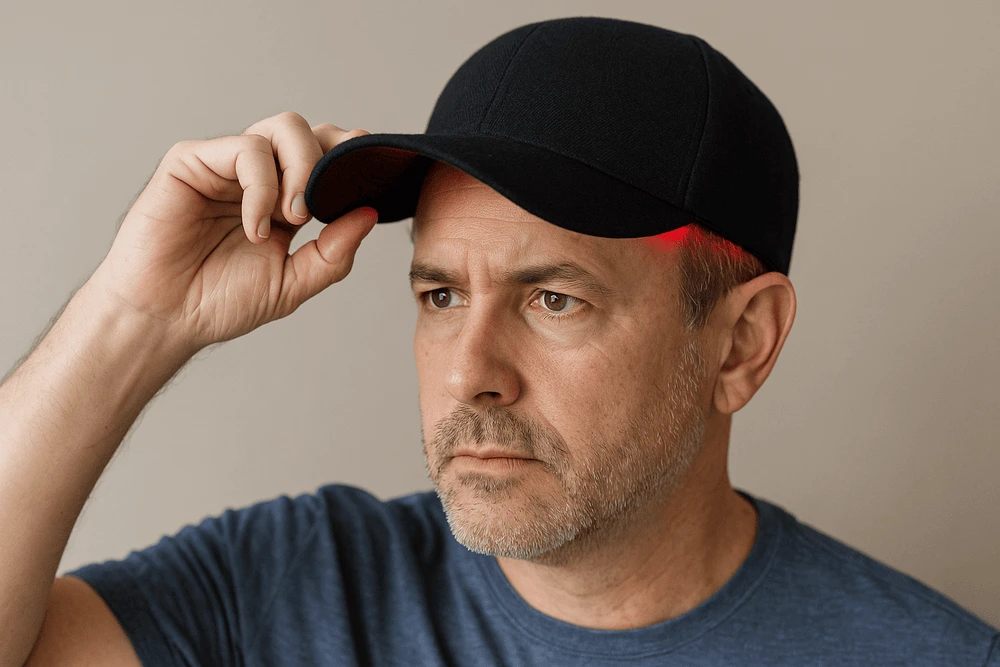
Considering a laser cap and wondering if it’s more than hype? This guide breaks down laser cap hair growth evidence, ideal users, safe usage, and how to pick a device you’ll actually stick with.
Thinking about laser cap hair growth? See who it helps, how to use it, and what to expect.
Quick Take
What it is: Low-Level Laser Therapy (LLLT) uses red/near-infrared light (typically ~630–680 nm and 780–850 nm) at low power to stimulate hair follicles.
Who it helps: Best data are for androgenetic alopecia (pattern hair loss) in men and women. Works as an adjunct to proven therapies (e.g., minoxidil, finasteride).
What to expect: For responders, shedding stabilizes first; visible density gains usually appear at 3–6+ months with 3–4 sessions/week.
Safety: Generally well tolerated. Avoid if you have photosensitivity, active scalp cancer/precancer, or are on photosensitizing drugs without medical guidance.
See also:Everyday hair care routine · Daily scalp care routine · Non-surgical methods
How LLLT May Help Hair
- Cellular energy: Red/NIR photons are absorbed by cytochrome c oxidase, supporting mitochondrial ATP and follicle metabolism.
- Anti-inflammatory effects: Low-level light can down-shift inflammatory mediators that nudge follicles into rest.
- Hair-cycle nudging: More follicles enter/extend anagen (growth) and fewer linger in telogen.
- Scalp microcirculation: Modest improvement in local blood flow supports nutrient delivery.
What The Evidence Says (in Plain English)
- Multiple randomized and sham-controlled trials show statistically significant increases in hair density with laser combs/caps compared with sham.
- Meta-analyses report modest but real benefits for AGA when devices are used as directed—largest gains often occur when LLLT is combined with minoxidil (± oral 5-AR inhibitors for appropriate candidates).
- Results are not universal: some people respond well; others see little change. Consistency is the biggest predictor of success.
How To Use a Laser Cap (Starter Protocol)
- Frequency: 3–4 times per week.
- Session length: 10–30 minutes depending on device instructions.
- Consistency: Set phone reminders; track with monthly photos in the same lighting.
- Stack smart: Use LLLT on days/times separate from microneedling sessions; it can be used alongside topical minoxidil (let minoxidil dry before capping).
Who’s a Good Candidate?
- Men or women with early-to-moderate pattern hair loss.
- Post-transplant maintenance to support surrounding native hair (per clinic protocol).
- Not ideal as a stand-alone fix for sudden diffuse shedding (e.g., iron/thyroid/meds). Diagnose and correct triggers first.
Choosing a Device (What Actually Matters)
- Wavelengths: Look for red 630–680 nm (many caps use ~650 nm) ± near-infrared 780–850 nm.
- Diode count & coverage: More true laser diodes (not just LEDs) and full-scalp coverage help dose evenly.
- Power & dosing: Typical ~5 mW/diode; follow the manufacturer’s dose per session rather than chasing raw numbers.
- Fit & usability: A cap/helmet you’ll wear 3–4×/week. Ventilation matters.
- Certification & warranty: Choose reputable manufacturers with safety certifications, clear manuals, and return policies.
- Don’t overpay for gimmicks: Pulsed vs continuous modes show no consistent clinical difference in hair outcomes.
Safety Checklist
- Avoid if you have photosensitive disorders or take photosensitizing medications (e.g., certain antibiotics, isotretinoin) unless your doctor approves.
- No use over suspicious scalp lesions or active skin cancers.
- Stop if you get persistent redness, burning, headache, or scalp irritation; review fit and session length.
- Eyes: Most caps shield light, but don’t stare at diodes; follow eye-safety instructions.
Results Timeline & Expectations
- Weeks 4–8: Shedding often stabilizes; hair feels fuller to the touch.
- Months 3–6: Early visible density changes on photos if you’re a responder.
- Months 6–12: Best snapshot for whether it’s worth continuing.
- Maintenance: Benefits persist only with ongoing use.
Pairing LLLT With Other Options
- Minoxidil (topical): Strong complementary evidence; apply and let it dry before capping. See our Minoxidil Foam vs Solution guide
- Finasteride/Dutasteride (men): Systemic DHT control + LLLT can enhance outcomes. See Finasteride vs. Dutasteride
- Microneedling: Space LLLT away from needling days to minimize irritation.
Layering treatments helps. Consider topical minoxidil, LLLT, microneedling (timed properly), and address thyroid/iron if deficient.
See: Hair Loss Prevention Routine · Microneedling: How Often & Needle Size · Non-surgical methods
Cost & Value
- Quality home devices range roughly from mid-hundreds to low-thousands (USD).
- Think cost per month of realistic use over 12 months; choose a device whose routine you’ll keep.
See Top-Rated Clinics
Prefer a diagnosis-first approach? Browse neutral, vetted clinics that manage genetic hair loss with medical therapy (and surgery if needed). Filter by credentials, outcomes, and follow-up care. → See top-rated clinics
Hair Enhancement Resources & Guides
- Everyday hair care routine
- Daily scalp care routine
- Non-surgical methods
- Hair loss prevention routine
- Microneedling for Hair: How Often & Needle Size
FAQs: Laser Cap Hair Growth
Bottom Line
For many with pattern thinning, a laser cap hair growth plan can offer modest, real benefits—especially combined with proven therapies. Choose a device you’ll use 3–4×/week, follow safety basics, and judge results after 6–12 months using consistent photos. See top-rated clinics here.
Know a friend testing laser cap hair growth? Send them this checklist.
References
- American Academy of Dermatology (AAD). Hair loss: Diagnosis & treatment
- AAD. Red-light therapy: is it right for your skin?
- Systematic review & meta-analysis (2021): FDA-cleared home LLLT devices para pattern hair loss
- Review (2014, JAAD/PubMed)
- Narrative review (2021, PMC)
- Randomized/sham trials (Harvard DASH, 2014)
- Meta-análises adicionais (2019–2024)
- FDA 510(k) clearances (exemplos HairMax)
- Harvard Health Publishing. It’s not too late to save thinning hair
Medical Disclaimer: The content on hairimplants.net is for informational purposes only and should not be considered medical advice. It does not replace a professional medical consultation, diagnosis, or treatment. Readers are encouraged to seek guidance from a qualified healthcare provider before making any decisions about hair restoration treatments. Hairimplants.net accepts no liability for actions taken based on the information provided.
Affiliate Disclosure: Hairimplants.net may contain affiliate links. If you click a link and make a purchase, we may earn a small commission at no additional cost to you. This helps us keep our content free and research-based. Our editorial opinions are independent and not influenced by partnerships. We do not accept payment for favorable reviews or rankings. Links to medical sources are non-affiliate.