Reading time: 7 min.
If you’ve wondered whether omega-3 for hair growth is real or just hype, you’re not alone. Omega-3 fats (EPA, DHA, ALA) support scalp health and may ease inflammation, but results depend on the cause of hair loss and the dose/source you use.
This guide separates evidence from marketing and gives you a food-first plan. Know someone buying fish-oil gummies? Share this guide.
At a Glance
Omega-3s help skin/scalp barrier and may reduce inflammation that contributes to shedding in some people.
Small clinical trials suggest benefit for telogen effluvium when omega-3s are combined with other nutrients; they don’t “cure” genetic pattern loss.
Prioritize food sources (fatty fish twice weekly); supplements can fill gaps when diet is low.
Typical supplemental range: ~250–1000 mg EPA+DHA/day for general health; hair studies often use combination formulas.
Pause high-dose fish oil around surgery only if your surgeon advises; evidence on bleeding is mixed—follow your clinic’s protocol.
See also: Are Nutritional Deficiencies Causing Your Hair Loss? • Simple Meal Plans For Hair Growth • Daily Protein Intake For Healthy Hair • Omega-3 For Hair Growth
What Omega-3 Actually Does For Hair
Omega-3 fatty acids (EPA & DHA from marine sources; ALA from plants) integrate into cell membranes, modulate inflammatory pathways, and support the skin barrier. In hair terms, that can translate into a calmer scalp environment and better comfort if you’re prone to dandruff/seborrheic dermatitis—indirect wins that may reduce telogen effluvium triggers. They do not switch off the genetics of androgenetic alopecia on their own.
Smart Tip: Start by identifying the likely driver of loss. If you suspect nutrient triggers, read our base guide: Nutrition for Hair Growth: What’s Evidence-Backed
What The Evidence Says (Plain English)
- Telogen Effluvium (TE): A randomized trial in women with TE found that a combined oral supplement including omega-3/omega-6 plus antioxidants improved hair density and telogen/anagen ratios versus placebo over several months. Useful signal, but note it was a combo product—not omega-3 alone.
- Scalp Inflammation & Comfort: Omega-3s are broadly anti-inflammatory and may help people whose scalp conditions (e.g., seborrhea) aggravate shedding.
- Pattern Hair Loss: No robust evidence that omega-3 alone regrows hair in androgenetic alopecia. It can still be part of a health baseline alongside medical therapy.
For lifestyle triggers that often travel with shedding, see:
- Sleep: Sleep & Hair: How Many Hours Matter?
- Training: Exercise & Hair: Myths vs Facts
Food First: Best Omega-3 Sources
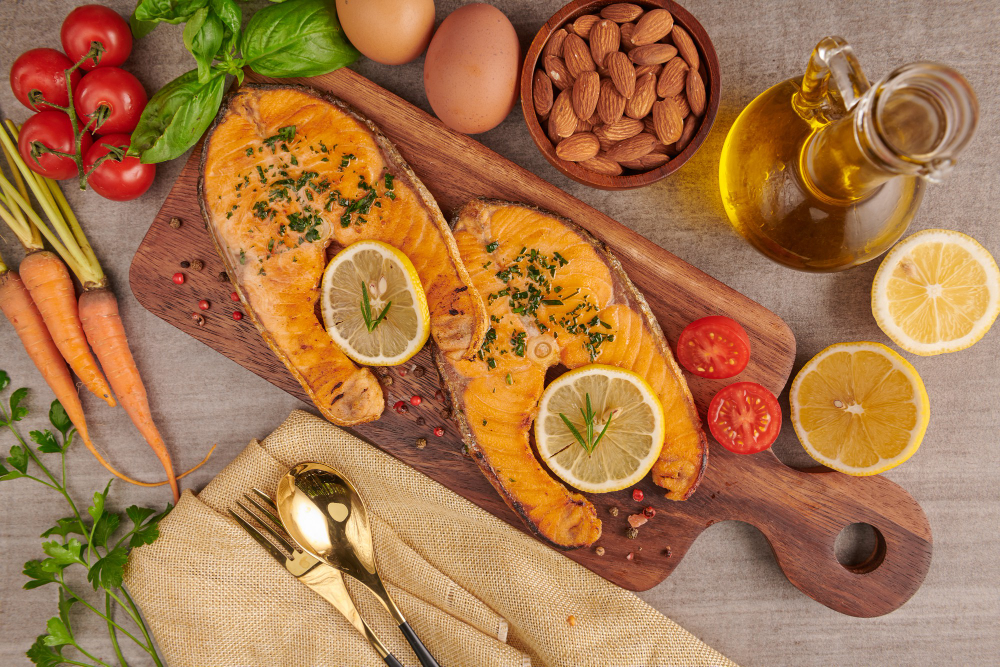
- Fatty Fish (EPA/DHA): salmon, sardines, mackerel, trout, herring. Aim for 2 servings/week.
- Shellfish: mussels and oysters contribute smaller amounts plus zinc.
- Fortified foods: some milks/yogurts.
- Plant Sources (ALA): flaxseed/chia (whole or ground), walnuts, rapeseed/canola oil, soy. (ALA converts inefficiently to EPA/DHA, so include fish or consider algae oil if you’re plant-based.)
Smart Tip: If you don’t eat fish, choose an algae-oil supplement for direct DHA/EPA, and still use flax/chia/walnuts for ALA.
Supplements: How Much & How To Choose
- General health range: ~250–1000 mg EPA+DHA per day (check label for the actual EPA/DHA, not just “fish oil 1000 mg”).
- Hair-focused blends: Trials often pair omega-3 with omega-6 (e.g., borage/EV oil), vitamins, and antioxidants. If you try a blend, keep doses modest and avoid megadoses.
- Quality checks: choose products with third-party testing, clear EPA/DHA amounts, and oxidation controls (IFOS/USP where available).
- Timing with meals: take with food to reduce reflux/fish burps.
If you want an easy week of meals that naturally cover these fats, see: Simple Meal Plans For Hair Growth
Safety, Interactions & Surgery Timing
Protein is only part of the puzzle. Low iron (ferritin) and zinc can also increase shedding. Practical combo moves:
- Bleeding risk: Contemporary data suggests standard doses have minimal effect, but surgeons often prefer pausing high-dose fish oil for ~7 days pre-op. Always follow your clinic’s written protocol.
- Medications: talk to your clinician if you use anticoagulants/antiplatelets.
- GI effects & reflux: reduce by splitting dose or switching formulas (enteric-coated, triglyceride form) and taking with meals.
- Quality & contaminants: reputable brands reduce heavy metals/oxidation; avoid bargain, strong “fishy” odors.
Smart Tip: If you’re prepping for a transplant, pair omega-3 planning with this checklist: Pre-Op Checklist: Meds, Wash, Lifestyle
Who Might Benefit Most
- People with low fish intake who want a heart-healthy baseline and calmer scalp status.
- Those with diet-related TE, as one part of a broader, targeted plan (iron/protein come first).
- Plant-based eaters using algae oil to cover EPA/DHA while focusing meals on protein, iron, zinc, and vitamin C pairing.
For the broader non-surgical toolkit, see: Non-Surgical Hair Restoration: Your Guide to What Actually Works
Practical 7-Day Omega-3 Game Plan (Food-First)
- 2 fish dinners (e.g., salmon; sardines on whole-grain toast).
- Breakfast adds: chia or ground flax to oats/yogurt 4–5 days/week.
- Snack swaps: walnuts or pumpkin seeds.
- Plant-based? Use algae oil (per label) on days without fish.
- Round out the plate: keep protein 1.0–1.6 g/kg/day, iron-smart sides, and plenty of plants.
Smart Tip: Coffee/tea can reduce plant-iron absorption; have them between meals. See protein targets here: Daily Protein Intake For Healthy Hair: The Evidence, The Math, The Meals
Hair Transplant Resources & Guides
- FUE vs FUT: Which suits you?
- How to Choose a Hair Transplant Clinic (criteria & red flags)
- Hair Transplant Recovery Guide (week-by-week)
- Hair Transplant Cost Calculators & Pricing Factors
- Non-Surgical Hair Restoration: Your Guide to What Actually Works
- Before Choosing a Hair Transplant Surgeon
- Is Stress Causing Your Hair Loss? A Guide to Lifestyle Triggers (And What to Fix First)
FAQ
See Top-Rated Hair Transplant Clinics
Prefer a diagnosis-first approach? Browse neutral, vetted clinics that manage genetic hair loss with medical therapy (and surgery if needed). Filter by credentials, outcomes, and follow-up care. → See top-rated clinics
Conclusion
Used smartly, omega-3 for hair growth can support scalp comfort and reduce diet-related shedding—especially when you start with food and correct other gaps (protein, iron, zinc). Keep expectations realistic, pair omega-3 with broader care, and you’ll give your follicles a calmer, healthier environment to thrive.
Found this helpful? Share it in your hair-loss or wellness group so more people use omega-3s wisely—food first, supplements when needed.
References
- NIH Office of Dietary Supplements — Omega-3 Fatty Acids (Health Professionals)
- American Heart Association — Fish and Omega-3 Fatty Acids
- Journal of Cosmetic Dermatology — Nutritional Supplement with Omega-3/6
- NHS — Hair Loss Overview
Medical Disclaimer: The content on hairimplants.net is for informational purposes only and should not be considered medical advice. It does not replace a professional medical consultation, diagnosis, or treatment. Readers are encouraged to seek guidance from a qualified healthcare provider before making any decisions about hair restoration treatments. Hairimplants.net accepts no liability for actions taken based on the information provided.
Affiliate Disclosure: Hairimplants.net may contain affiliate links. If you click a link and make a purchase, we may earn a small commission at no additional cost to you. This helps us keep our content free and research-based. Our editorial opinions are independent and not influenced by partnerships. We do not accept payment for favorable reviews or rankings. Links to medical sources are non-affiliate.