Reading time: 7 min.
If your roots collapse quickly, ends feel rough, or your shampoo stops lathering, you may be dealing with residue. The good news: you don’t need to fear silicones—you just need a smart routine. Below is a practical, evidence-aware plan to manage slip agents, styling products, hard water minerals, and sebum without frying your hair. And yes, we’ll map a silicones & build-up: clarifying schedule you can actually follow.
If this guide helps you—or that friend whose hair falls flat by day two—please share it. The right plan for silicones & build-up: clarifying schedule can save months of frustration.
Quick Take: Silicones, Residue, And Resets
Silicones aren’t the enemy. Modern, lightweight silicones (e.g., amodimethicone, dimethiconol) reduce friction and breakage—great for thinning hair when used well.
Build-up is multi-factor. It can be silicones, styling polymers, sebum, hard-water minerals, or dandruff scale. Solutions differ.
Clarify with purpose. Use a clarifying wash every 1–2 weeks if you heat style or layer products; every 3–4 weeks if minimalist.
Scalp ≠ lengths. Deep-clean the scalp; keep mid-lengths/ends cushioned with lightweight conditioner to avoid roughness.
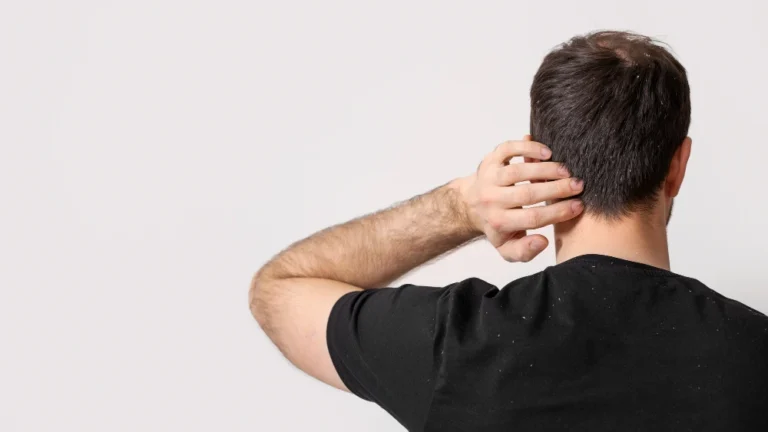
If flakes/itch join the party: Rotate an anti-dandruff active 2–3×/week and leave on 3–5 minutes.
Related reading: Everyday Hair Care Routine To Prevent Hair Loss · Conditioners & Leave-ins: What Helps, What Hurts · Heat Styling Without Breakage
Silicones: Friend, Not Foe (When You Rinse Right)
Silicones form a thin film that improves slip, reduces friction, and adds shine. For thinning or fragile hair, that often means less breakage in the shower and during styling.
Choose lighter, “targeted” silicones:
- Amodimethicone, bis-aminopropyl dimethicone, dimethiconol — deposit where the hair is most damaged, limiting heavy build-up.
- Pair with gentle surfactants and humectants (glycerin, panthenol) for balanced slip.
When silicones become a problem:
- You’re layering heavy creams/oils on top.
- You never clarify (minerals + product form a stubborn film).
- You’re applying serum at the roots (reserve for ends).
Related reading: Conditioners & Leave-ins: What Helps, What Hurts
Build-up 101: What You’re Actually Fighting
- Product film: Silicones, polyquats, styling resins.
- Sebum & pollution: Sticky, dust-collecting mix that dulls shine.
- Hard water minerals: Calcium/magnesium deposits make hair rough and less responsive.
- Dandruff/seborrheic dermatitis scale: Inflammation + flakes can mimic product build-up and increase shedding optics.
Match the remover to the residue:
- Product-heavy weeks: Use a clarifying shampoo with stronger surfactants once weekly or biweekly.
- Hard water: Try a chelating formula (often with EDTA; dedicated chelating shampoos) once monthly or after vacations.
- Flakes/itch: Use anti-dandruff actives (ketoconazole, zinc pyrithione, piroctone olamine, selenium sulfide, ciclopirox) 2–3×/week with 3–5 minutes contact time.
Related reading: Everyday Hair Care Routine To Prevent Hair Loss and Dandruff, Seborrheic Dermatitis & Shedding
Your Personalized Silicones & Build-up: Clarifying Schedule
If You Style Often (heat tools, serums, sprays)
- Week 1–2: Clarify every 7–10 days.
- Between clarifies: Gentle shampoo; condition ear-down.
- If flakes/itch: Insert an anti-dandruff day (3–5 min contact).
- Serum rule: 1 pump, ends only, post-blow-dry.
If You’re Minimalist (no heavy styling)
- Clarify every 3–4 weeks or when hair looks dull/lifeless.
- Keep daily cleanses gentle; use a spray leave-in instead of heavy creams.
If You Have Hard Water
- Prioritize anti-dandruff rotation 2–3×/week; clarify only when hair feels coated.
- Avoid perfumed oils on the scalp; treat lengths separately.
Pro move: Log what you apply (serum, mousse, protectant) and your wash result. Adjust the clarifying frequency up/down by just one day at a time.
The 3-Step Clarifying Day (Root Lift Without Roughness)
- Pre-rinse: Warm water 60–90 seconds to loosen film.
- Clarify: Massage scalp for 60 seconds; let lather sit 30–60 seconds (or per label).
- Condition ear-down: Lightweight formula with humectants + light silicones; leave 60–90 seconds; rinse well.
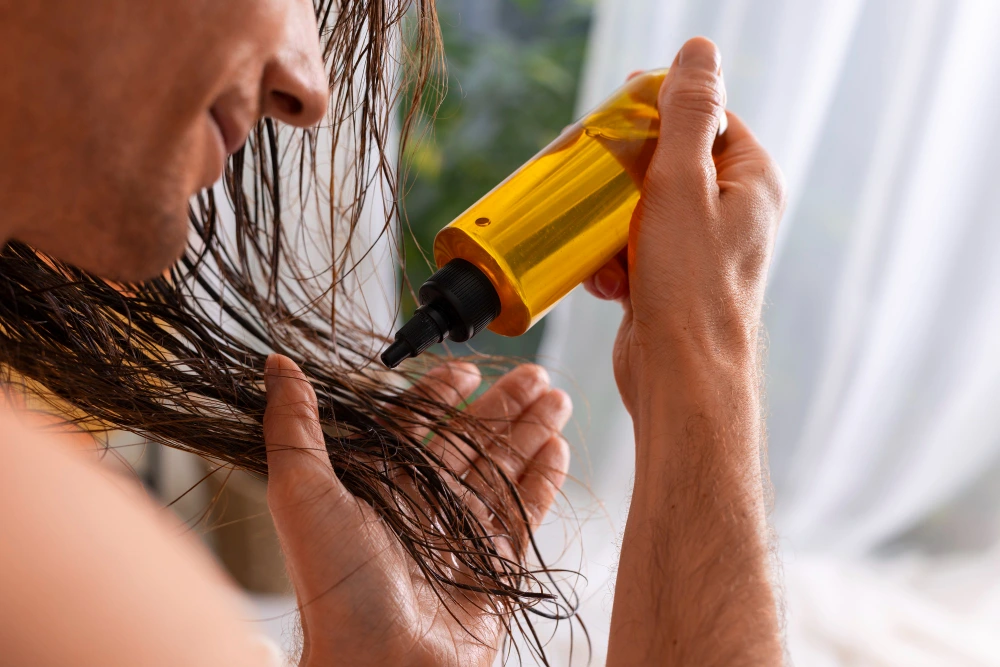
Optional finisher: A pea-sized serum (amodimethicone/dimethiconol) on ends only to re-seal the cuticle.
Related reading: Heat Styling Without Breakage
Signs You Need To Clarify (Today)
- Hair won’t lather or feels “waterproof.”
- Roots collapse 6–12 hours after washing.
- Ends feel squeaky-rough yet greasy at the crown.
- Color looks dull; styling grip is inconsistent.
What To Avoid (If You Want Volume)
- Heavy oils/butters at roots (shea, cocoa, petrolatum)—save for dry ends only.
- Protein every wash—risk of stiffness/snapping.
- Scrubbing scalp with nails—irritation increases shedding optics.
- Skipping contact time on medicated shampoos—less control of flakes → more “fake” shedding.
Weekly Template (Fine/Thinning Hair Example)
- Mon: Gentle shampoo → light conditioner (ear-down) → heat protectant → blow-dry low heat.
- Wed: Anti-dandruff shampoo (3–5 min) → light conditioner → ends-only serum.
- Fri: Clarify → light conditioner → leave-in mist (humectants + polyquats).
- Sun: Rest or gentle cleanse; air-dry to 80% before low-heat finish.
Deep dive on shampoos: See our ingredient guide: Hair Loss Prevention Routine and Daily Scalp Care Routine For Hair Growth
Buyer’s Checklist: Clarifying & Daily Care
Look for:
- Clear labeling (clarifying/chelating) and simple surfactant systems.
- EDTA or chelating agents for hard water.
- Low fragrance and dye-free if sensitive.
- Lightweight conditioner (humectants + amodimethicone/dimethiconol).
- True heat protectant for style days (polyquats/silicones listed high in INCI).
See Top-Rated Clinics
Prefer a diagnosis-first approach? Browse neutral, vetted clinics that manage genetic hair loss with medical therapy (and surgery if needed). Filter by credentials, outcomes, and follow-up care. → See top-rated clinics
Hair Enhancement Resources & Guides
- Everyday Hair Care Routine To Prevent Hair Loss
- Conditioners & Leave-ins: What Helps, What Hurts
- Heat Styling Without Breakage
- Dandruff, Seborrheic Dermatitis & Shedding
FAQs About Silicones & Build-up: Clarifying Schedule
The Takeaway
A smart silicones & build-up: clarifying schedule keeps roots lifted, ends smooth, and shedding optics down. Clarify with purpose (weekly or monthly, based on habits), protect the scalp with medicated rotations when needed, and keep conditioners and serums ear-down to preserve volume. See top-rated clinics here if you want a medical review of persistent shedding—and if this helped, please share it with someone who keeps asking why their hair feels “clean but coated.”
If this article helped, please share it with someone worried about hair loss—your share could be the nudge they need to choose the right next step.
References
- American Academy of Dermatology — Tips for healthy hair (gentle cleansing, heat, detangling)
- American Academy of Dermatology — Dandruff: How to treat (contact time, frequency)
- Harvard Health Publishing — What is the best way to treat severe dandruff? (leave-on guidance)
- International Society of Hair Restoration Surgery (ISHRS) — Patient Education Hub (evidence-based hair loss resources)
Medical Disclaimer: The content on hairimplants.net is for informational purposes only and should not be considered medical advice. It does not replace a professional medical consultation, diagnosis, or treatment. Readers are encouraged to seek guidance from a qualified healthcare provider before making any decisions about hair restoration treatments. Hairimplants.net accepts no liability for actions taken based on the information provided.
Affiliate Disclosure: Hairimplants.net may contain affiliate links. If you click a link and make a purchase, we may earn a small commission at no additional cost to you. This helps us keep our content free and research-based. Our editorial opinions are independent and not influenced by partnerships. We do not accept payment for favorable reviews or rankings. Links to medical sources are non-affiliate.