Reading time: 8 min.
If you’re curious whether scalp kneading and a few drops of oil can boost thickness, here’s the evidence-based truth: massage is promising as an adjunct, not a stand-alone cure. Small human studies and lab work suggest mechanical stimulation may increase hair shaft thickness over months, while some oils help scalp health or fiber protection. Expectations—and technique—matter.
If this guide helps someone who’s stress-scrolling about shedding, please share it—the right facts about scalp massage hair growth can genuinely calm nerves.
Quick Take: What The Evidence Actually Says
A small human study (9 men, daily 4-minute massage for 24 weeks) reported increased hair thickness; lab work suggested gene-expression changes in dermal papilla cells under mechanical stress. Early evidence, not a cure.
A large self-assessment survey in AGA found many participants reported improvement with standardized massages—but it wasn’t a randomized clinical trial. Treat as hypothesis-generating.
Oils: Rosemary oil has one small RCT vs 2% minoxidil (6 months; similar outcomes; more scalp itch with rosemary). Peppermint oil has animal data (mice), not human RCTs. Coconut oil reduces protein loss from the hair fiber (cosmetic protection), not follicle stimulation per se.
Massage and oils should complement proven therapies (e.g., minoxidil; prescribed options), not replace them. See your plan with a clinician or an ISHRS-affiliated clinic.
Related reading: Thyroid And Hair Loss: What To Test · Vitamin Deficiency & Hair Loss (Iron, D, B12, Zinc) · Common Causes Of Hair Loss
How Massage Might Help (In Plain English)
Mechanical forces (the gentle stretch/compression from massage) may nudge follicle-supporting pathways and improve local blood flow. In the 2016 pilot, hair thickness improved after 24 weeks; in vitro data showed gene changes in papilla cells after stretching. This is intriguing but still early-stage evidence. Keep expectations realistic and look for steady, long-term habits rather than quick wins.
Step-By-Step: A Safe, Effective Massage Routine (10 Minutes)
When: 5–10 minutes, 1–2×/day, or 10–15 minutes, 3–4×/week—consistency beats intensity.
Where: Clean scalp (dry or slightly damp).
Pressure: Light-to-moderate—no scratching.
- Warm-up (1 min): Place fingertips at the hairline; small circles toward the crown.
- Temple sweeps (2 min): Circular motions over temples moving upward; keep shoulders relaxed.
- Side-to-crown lifts (3 min): Place fingertips above ears; gently “lift” scalp (detumescence style) without sliding on hair.
- Vertex focus (2 min): Small circles at the crown; steady, even pressure.
- Nape release (2 min): Circles where neck meets scalp to reduce tension.
- Finish: If using topicals (e.g., minoxidil), apply after massage once the scalp is dry.
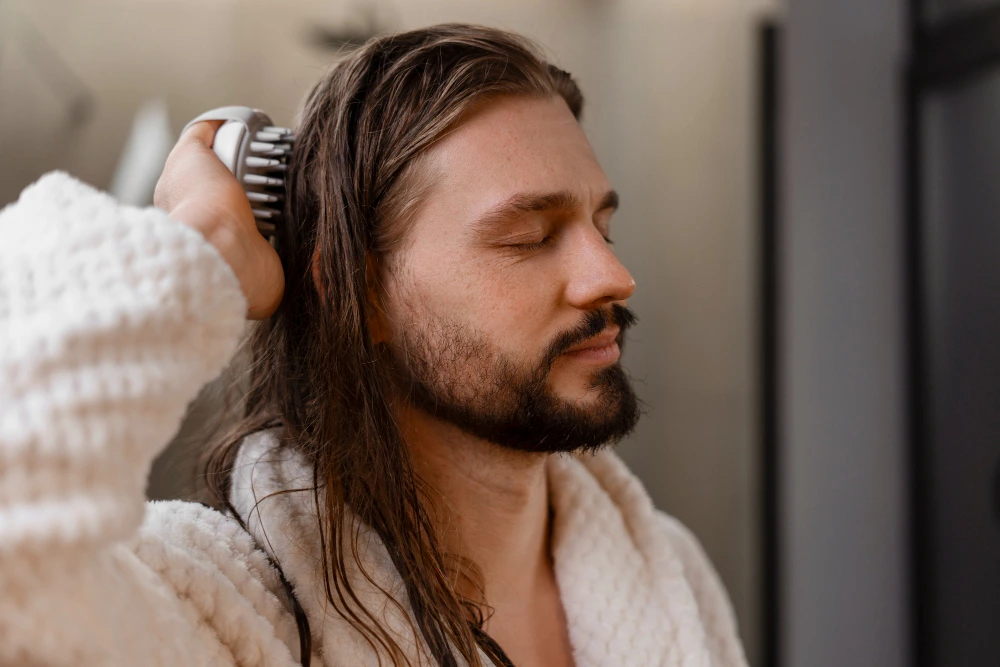
Tool or hands? Fingers are great. If you use a silicone massager, keep pressure light and avoid tangling.
The Oils: What Helps, What Hurts
Oils With Some Supporting Evidence
- Rosemary oil (diluted): In a 6-month RCT against 2% minoxidil, outcomes were similar; more scalp itching with rosemary. Consider it a botanical adjunct, not a replacement. Patch-test first.
- Peppermint oil (diluted): 2014 mouse study suggested robust growth vs minoxidil, but no comparable human RCT yet. If used, keep to low concentrations and watch for irritation.
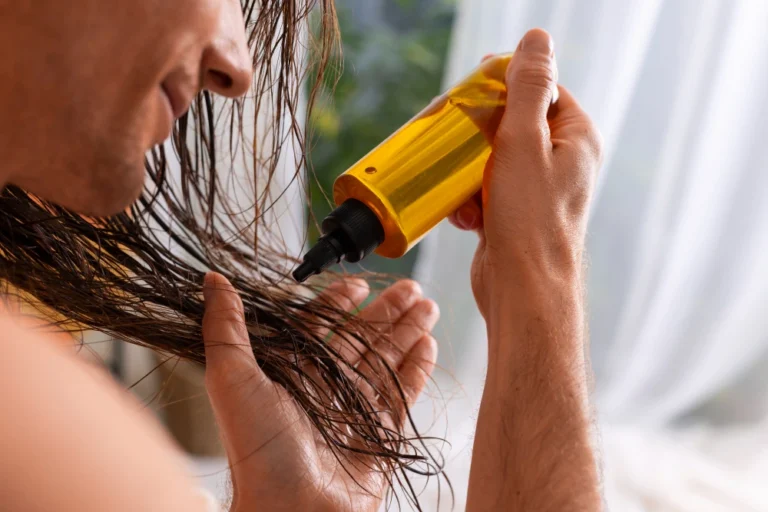
- Coconut oil (for fibers): Doesn’t grow hair, but reduces protein loss when used as a pre-/post-wash—useful for minimizing breakage so sheds don’t feel worse.
Oils To Skip On The Scalp (Or Use With Caution)
- Fragrance-heavy essential oils and oxidized blends can trigger allergic contact dermatitis—a real problem on the scalp. Patch-test; store oils properly; discontinue at first sign of irritation.
Technique & dilution: If you use essential oils, keep total EO concentration ~1–2% in a neutral carrier (e.g., fractionated coconut, squalane, jojoba). Essential oils are potent; more is not better.
A Practical 8-Week Massage + Care Plan
Weeks 1–2: Learn the pattern
- 10 minutes daily after your evening cleanse or before bed.
- Keep nails short; use fingertips.
- Track photos of your part/temples biweekly (same lighting).
Weeks 3–6: Layer smartly
- If scalp is calm, you may add a diluted rosemary blend 2–3×/week at night; skip if you’re using minoxidil on the same evening.
- Rotate an anti-dandruff shampoo 2–3×/week if flakes/itch are present (ketoconazole/ZPT/PO), leaving it in 3–5 minutes before rinsing.
- Keep lengths conditioned ear-down to reduce frictional breakage.
Weeks 7–8: Reassess
- Look for easier styling, improved scalp comfort, and fewer snapped strands.
- If you see clear worsening or persistent inflammation, stop oils and see a dermatologist.
Related reading: Everyday Hair Care Routine To Prevent Hair Loss, Daily Scalp Care Routine For Hair Growth
Considering meds? Start with Finasteride Vs. Dutasteride and Minoxidil Foam Vs. Solution.
When Massage & Oils Are Not Enough
Massage and oils are adjuncts. For androgenetic alopecia, proven therapies (topical minoxidil; oral finasteride for appropriate patients; other physician-directed options) remain the backbone. The ISHRS emphasizes evidence-based care—DIY methods shouldn’t delay diagnosis and treatment.
Clinic checklist (neutral):
Before You Choose A Hair Transplant Surgeon
How To Choose The Best Hair Transplant Clinic
Hair Transplant Clinic Checklist
See Top-Rated Clinics
Prefer a diagnosis-first approach? Browse neutral, vetted clinics that manage genetic hair loss with medical therapy (and surgery if needed). Filter by credentials, outcomes, and follow-up care. → See top-rated clinics
Hair Enhancement Resources & Guides
- Everyday Hair Care Routine To Prevent Hair Loss
- Hair Loss Prevention Routine
- Microneedling For Hair Growth: How Often & Needle Size
- Stress And Lifestyle Triggers Of Hair Loss
FAQs About Scalp Massage Hair Growth
The Takeaway
For scalp massage hair growth, the science is encouraging but early. Massage is low-cost and low-risk when done gently; certain oils (rosemary, diluted) have a bit of human data, while others (peppermint) are preclinical. Protect fibers with good conditioning, keep the scalp calm, and treat underlying causes—then consider adding massage as a habit layered onto proven therapies. See top-rated clinics here if you want a medical plan tailored to your pattern and goals—and if this helped, please share it with a friend who keeps asking if massages “really work.”
If this article helped, please share it with someone worried about hair loss—your share could be the nudge they need to choose the right next step.
References
- Koyama T, Kobayashi K, Hama T, et al. Standardized Scalp Massage Results in Increased Hair Thickness. ePlasty. 2016.
- Panahi Y, Taghizadeh M, Marzony ET, Sahebkar A. Rosemary oil vs. 2% minoxidil in AGA (RCT). Skinmed. 2015.
- Oh JY, Park M-A, Kim M, et al. Peppermint Oil Promotes Hair Growth (mice). Toxicol Res. 2014.
- Rele AS, Mohile RB. Effect of Coconut Oil on Prevention of Hair Damage. J Cosmet Sci. 2003.
- English RS Jr, et al. Self-Assessments of Standardized Scalp Massages for AGA. Dermatol Ther (Heidelb). 2019.
- AAD — Do you have hair loss or hair shedding? (shedding basics).
- DermNet — Allergic contact dermatitis to essential oils.
- ISHRS — Treatments for Hair Loss (evidence-based overview).
Medical Disclaimer: The content on hairimplants.net is for informational purposes only and should not be considered medical advice. It does not replace a professional medical consultation, diagnosis, or treatment. Readers are encouraged to seek guidance from a qualified healthcare provider before making any decisions about hair restoration treatments. Hairimplants.net accepts no liability for actions taken based on the information provided.
Affiliate Disclosure: Hairimplants.net may contain affiliate links. If you click a link and make a purchase, we may earn a small commission at no additional cost to you. This helps us keep our content free and research-based. Our editorial opinions are independent and not influenced by partnerships. We do not accept payment for favorable reviews or rankings. Links to medical sources are non-affiliate.