Reading time: 8 min.
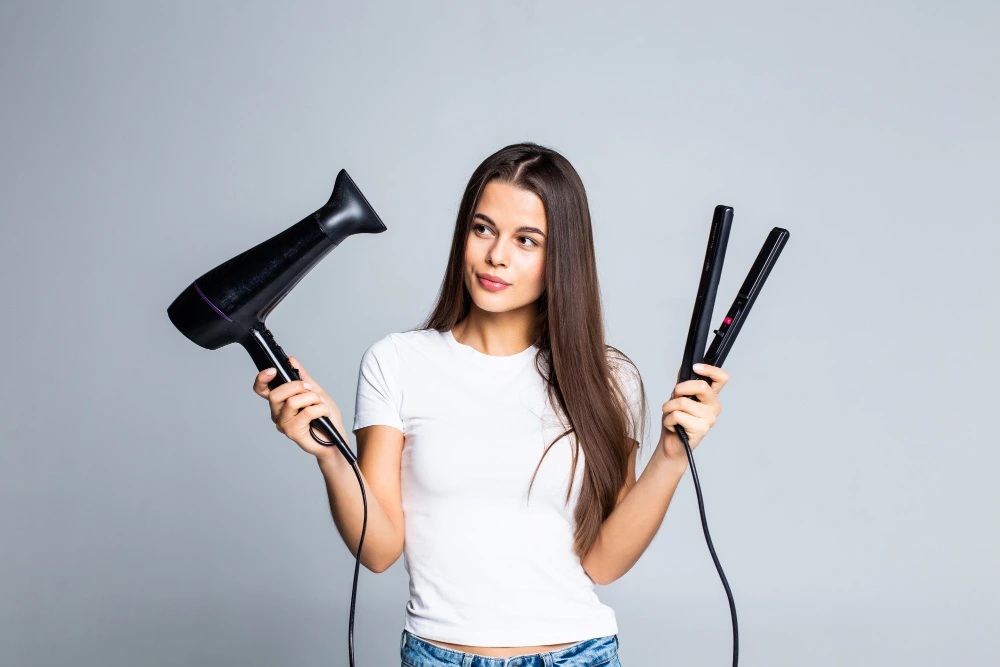
If you’re battling heat styling breakage, the fix isn’t quitting hot tools forever—it’s using them smarter. With the right prep, temperature control, and timing, you can keep your finish sleek without sacrificing hair strength.
If this saves a friend from another scorched blowout, please share it—preventing heat styling breakage is easier when you know the rules.
Quick Take: Heat Without Hurt
Prep beats repair: Clean, conditioned, detangled hair with a true heat protectant reduces surface friction and moisture loss.
Lowest effective heat: Start low and step up only as needed; fewer passes beat hotter passes.
Water is the wildcard: Use hot tools on fully dry hair (except devices designed for damp hair).
Section small, move smoothly: Slow, steady passes with tension; no clamping-and-holding.
Recover on off-days: Protein-light moisture, bond builders sparingly, and gentle handling.
Related reading: Everyday hair care routine · Daily scalp care routine · Prevention Routine for Hair Loss · What Causes Women’s Hair Loss?
Why Heat Breaks Hair: The Short Science
Hair fibers are like cables: a cuticle shell protecting the cortex. Excessive heat can:
- Lift/erode cuticles → roughness, tangling, dullness.
- Drive out bound water → brittleness and snapping under tension.
- Disturb bonds (hydrogen/temporary; with enough stress, deeper damage) → loss of shape and strength.
Your Pre-Style Protocol (5 Minutes That Matter)
- Clean, not squeaky: Use a gentle shampoo; add a light conditioner ear-level down for slip (less combing breakage).
- Blot, don’t rub: Microfiber towel or T-shirt to reduce friction.
- Detangle wet, strategically: Wide-tooth comb + slip from conditioner/leave-in. Start at ends.
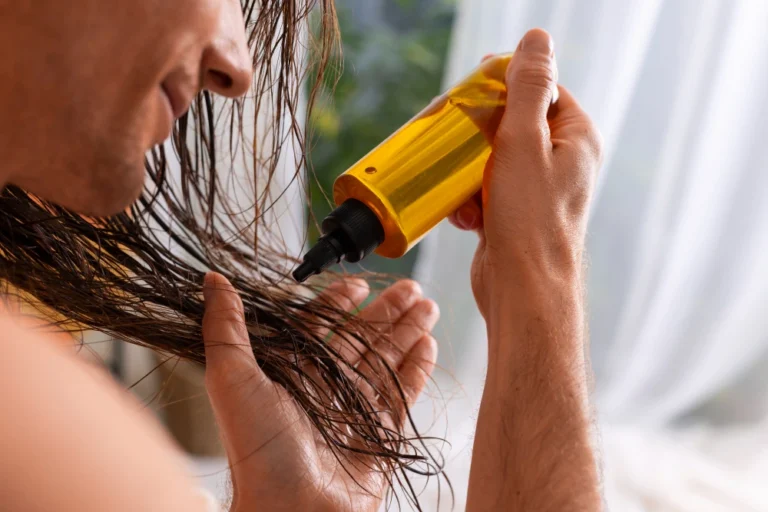
- Heat protectant on damp hair: Look for polymers/silicones (e.g., amodimethicone, dimethiconol, polyquats) that form a protective film.
- Air-dry to ~80% before blow-dry: Less time under heat = less damage.
Related Reading: Choosing the right conditioner weight prevents limp roots later: Conditioners & Leave-ins: What Helps, What Hurts.
Blow-Drying, Smarter
- Nozzle on, heat off the scalp: The concentrator aligns airflow to smooth the cuticle.
- Brush choice: Round brush for volume; paddle for sleek. Boar/nylon mix = grip without scraping.
- Distance & direction: Keep dryer a few centimeters away; aim down the hair shaft to lay cuticles flat.
- Finish with cool shot: Helps set style and reduce frizz optics.
Flat Iron & Curler Rules (Minimal Passes, Maximum Shine)
- Fully dry hair only: Steam = water flash damage.
- Section thin: 2–3 cm sections mean one smooth pass instead of three tuggy passes.
- Tension + glide: Gentle tension, steady speed; don’t park the iron.
- Temperature: Use the lowest effective setting for your texture and condition. Fine/fragile or color-treated hair usually needs lower settings than coarse/virgin hair.
- Clean plates/barrels: Product residue scorches hair; wipe when cool.
Smart Tip: If breakage follows color/bleach or postpartum shifts, see Female Pattern Hair Loss Vs. Diffuse Thinning and Postpartum Hair Loss Vs. Androgenetic Alopecia.
Product Playbook: What Helps, What Hurts
Helps
- Heat protectants with film-formers (polyquaterniums), silicones (amodimethicone/dimethiconol), and humectants (glycerin/panthenol) for slip.
- Light leave-in sprays for fine hair; creams for coarse/porous lengths only.
- Targeted protein/bond builders (sparingly) if hair feels mushy after chemical services.
- Clarifying once every 1–2 weeks to remove residues that burn on contact with heat.
Can Hurt
- Heavy oils/butters at the root before heat (they cook, collapse volume, and attract lint).
- Over-proteining (stiff → snap).
- High-fragrance/EO blends on scalp pre-heat (irritation risk).
- Old tools with hot spots or chipped plates.
Smart Tip: For routine design and scalp kindness, see Everyday Hair Care Routine To Prevent Hair Loss and Stress And Lifestyle Triggers Of Hair Loss.
Weekly Template To Reduce Heat Styling Breakage
- Mon (Style Day): Wash → conditioner (ear-down) → heat protectant → blow-dry + iron/curl (lowest effective heat; minimal passes).
- Tue: No wash; anti-frizz serum on ends only; touch-ups with medium heat if truly needed.
- Wed: Gentle wash or co-wash → air-dry 80% → low-heat blow-dry only.
- Thu: Rest; dry shampoo at roots; ends-only serum.
- Fri (Style Day): Repeat Mon; consider a lighter finish (one-pass polish).
- Weekend: Moisture mask (no heavy oils at roots) + no hot tools.
Related reading: If you microneedle, keep leave-ins ultra-gentle for 24–48 h and avoid hot tools on irritated skin: Microneedling For Hair Growth: How Often & Needle Size.
Special Situations
Color-Treated Or Bleached Hair
Increase conditioning on lengths, reduce heat frequency, and keep temperatures conservative. A monthly trim removes frayed ends that split upward.
Curly/Wavy Hair
Diffuse on low heat/low airflow with a heat protectant spray. Touch up curls with a curling iron on quick, controlled passes; avoid clamping tips.
Thinning + Dandruff/Itch
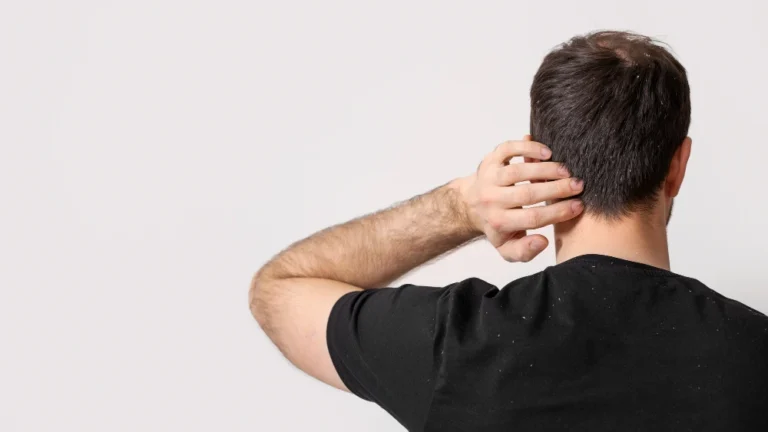
Inflammation worsens perceived loss and shower breakage. Rotate an anti-dandruff shampoo 2–3×/week and keep styling heat modest. See Everyday Hair Care Routine To Prevent Hair Loss.
Buyer’s Checklist: Tools & Products That Protect
- Tools with adjustable, stable temperature and ceramic/tourmaline plates or barrels.
- Heat protectant listing film-formers/silicones near the top of INCI.
- Quality brush (no seams/burrs on bristles) and a concentrator nozzle.
- Lightweight leave-in for detangling; ends-only serum after styling.
- Clarifying shampoo (gentle) to avoid residue scorching.
See Top-Rated Clinics
Prefer a diagnosis-first approach? Browse neutral, vetted clinics that manage genetic hair loss with medical therapy (and surgery if needed). Filter by credentials, outcomes, and follow-up care. → See top-rated clinics
Hair Enhancement Resources & Guides
- Hair Loss Prevention Routine
- Shampoo for Thinning Hair: Ingredients that Matter
- Conditioner For Thinning Hair: What Helps, What Hurts
- Seasonal Hair Shedding: Fall Vs. Spring — What’s Normal?
- Considering medical therapy or surgery? Start with How To Choose The Best Hair Transplant Clinic and Hair Transplant Recovery Timeline.
FAQs About Heat Styling Breakage
The Takeaway
Preventing heat styling breakage isn’t about avoiding heat forever—it’s about prep, protection, and restraint: condition for slip, apply a real heat protectant, use the lowest effective temperature, keep passes minimal, and build recovery days into your week. See top-rated clinics here to discuss a holistic plan if your shedding seems out of proportion, and—if this guide helped—please share it with someone who keeps asking why their ends “just won’t behave.”
If this article helped, please share it with someone worried about hair loss—your share could be the nudge they need to choose the right next step.
References
- American Academy of Dermatology — Tips For Healthy Hair
- American Academy of Dermatology — How To Treat Dandruff (wash cadence, scalp care)
- American Academy of Dermatology — Seborrheic Dermatitis: Treatment
- Harvard Health Publishing — What is the best way to treat severe dandruff?
- ISHRS — Patient Education Hub (hair & treatments)
Medical Disclaimer: The content on hairimplants.net is for informational purposes only and should not be considered medical advice. It does not replace a professional medical consultation, diagnosis, or treatment. Readers are encouraged to seek guidance from a qualified healthcare provider before making any decisions about hair restoration treatments. Hairimplants.net accepts no liability for actions taken based on the information provided.
Affiliate Disclosure: Hairimplants.net may contain affiliate links. If you click a link and make a purchase, we may earn a small commission at no additional cost to you. This helps us keep our content free and research-based. Our editorial opinions are independent and not influenced by partnerships. We do not accept payment for favorable reviews or rankings. Links to medical sources are non-affiliate.