Reading time: 9 min.
If you’re hunting for the best shampoo for thinning hair, start with what’s on the label—not the logo. The right surfactants keep your scalp clean, but it’s the active ingredients that can support thicker-looking hair, reduce shedding linked to scalp issues, and complement medical treatments. Below is a science-first guide to what matters (and what doesn’t) so you can shop smarter and set realistic expectations.
If this guide helps, please share it with someone who’s struggling with shedding—the right info can genuinely calm a lot of anxiety.
Quick Take: What Actually Helps
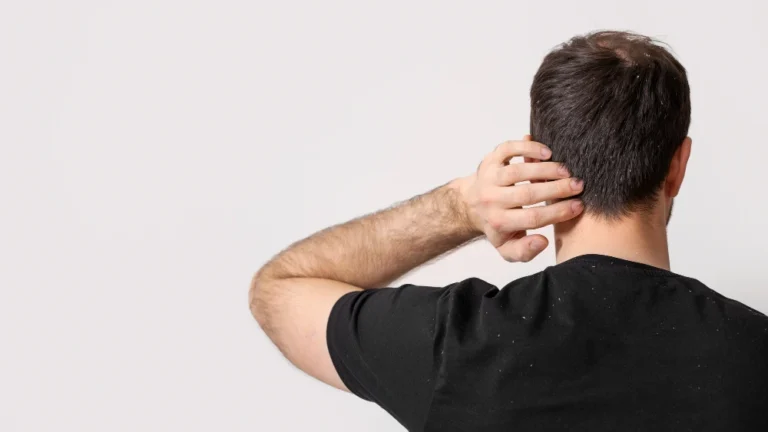
Treat scalp inflammation/dandruff: Ketoconazole, zinc pyrithione, piroctone olamine, selenium sulfide. These can reduce shedding when dandruff or seborrheic dermatitis is part of the problem.
Adjuncts with emerging evidence: Caffeine (often paired with adenosine), rosemary oil. Small trials suggest benefits for density or hair counts. Use as a complement, not a sole therapy.
DHT-modulating topicals: Ketoconazole and (to a lesser extent) saw palmetto may play a supporting role; evidence is mixed and generally weaker than approved drugs.
Biotin in shampoo? Helpful if you’re deficient when taken orally, but there’s little proof that biotin in shampoo changes growth. Prioritize actives with clinical data.
Related reading: Everyday hair care routine · Daily scalp care routine · Prevention Routine for Hair Loss · Lifestyle Triggers for Hair Loss
The Evidence-Based Ingredient Shortlist (And How To Use Each)
1) Ketoconazole (1–2%) — anti-dandruff + possible anti-androgen support
A mainstay antifungal for seborrheic dermatitis that can reduce flaking, itching, and inflammation—the trifecta that often worsens shedding. Some studies also hint at increased hair shaft diameter/anagen ratio.
How to use: 2–3×/week, leave on 3–5 minutes before rinsing.
Related Reading: If flakes are driving you nuts, compare actives and routine steps in Everyday Hair Care Routine To Prevent Hair Loss.
2) Zinc Pyrithione (ZPT, ~1%) — flake control with hair-count data
A classic anti-dandruff active with modest hair-count improvements reported in long-term use—likely by improving scalp ecology rather than acting directly on follicles.
How to use: Daily or every other day if tolerated; also give it 3–5 minutes of contact time.
3) Piroctone Olamine (PTO, ~0.5–1%) — anti-fungal with anti-shedding signal
An antifungal with anti-shedding signals in randomized trials. Particularly good for oily, flaky scalps where seborrheic dermatitis is suspected.
How to use: 2–4×/week; rotate with a gentle cleanser on off days.
4) Caffeine (often 0.2–1%) — adjunct with growing but still limited human data
Penetrates follicles and may counter miniaturization pathways. Evidence is promising but not definitive—best used alongside a scalp-calming active.
How to use: Daily or alternate days; massage in and let it sit briefly.
5) Rosemary Oil (rosmarinus officinalis) — “natural” option with a small RCT
One of the few botanicals with a small head-to-head trial against 2% minoxidil. Results were comparable at six months, with more scalp itching in the botanical arm.
How to use: Choose formulations designed for the scalp; patch test and begin 2–3×/week.
6) Saw Palmetto — mixed data; more support orally than in shampoo
Data are mixed; stronger evidence exists for oral forms than rinse-off shampoos. If present in a formula, consider it a “nice to have,” not a cornerstone.
7) Selenium Sulfide / Ciclopirox — for stubborn dandruff/SD
Helpful for stubborn dandruff or inflamed scalps. These won’t “grow” hair but they reduce inflammation that accelerates shedding.
How to use: Follow label; avoid overuse if you have a sensitive scalp.
Smart Tip: If you suspect hormones, iron, thyroid, or medications are part of your story, fix the why first. Explore:
Hormonal And Health-Related Causes Of Hair Loss
Thyroid And Hair Loss: What To Test
Vitamin Deficiency & Hair Loss (Iron, D, B12, Zinc)
Medications That Cause Hair Shedding (Telogen Effluvium)
How To Use An “Active” Shampoo For Results
- Frequency: Start with 2–3×/week for medicated formulas (ketoconazole, ZPT, piroctone). Use a gentle cleanser between active days.
- Contact time: Leave actives on 3–5 minutes. Massage gently; don’t scratch.
- Rinse strategy: Lukewarm water is kinder to the barrier and helps reduce irritation.
- Conditioner placement: From mid-lengths to ends only to preserve lift at the roots.
- Patch test: Especially for rosemary or new complexes.
- Cycle intelligently: If flakes clear, reduce frequency to maintenance and keep a caffeine/adenosine shampoo for daily use.
Smart Tip: Add one variable at a time and reassess every 8–12 weeks. For a broader non-surgical stack, see Effective Non-Surgical Hair Restoration Methods.
Sample 7-Day Routine (Mix & Match)
- Mon: Ketoconazole shampoo (3–5 min) → lightweight conditioner on lengths.
- Tue: Gentle cleanse → apply minoxidil after drying (if using). See Minoxidil Foam Vs. Solution.
- Wed: Caffeine (± adenosine) shampoo → quick scalp massage.
- Thu: Rest day or gentle cleanse; avoid heavy silicones if you crave volume.
- Fri: Piroctone olamine or zinc pyrithione (3–5 min).
- Sat: Microneedling day (if in your plan) + gentle cleanse. Learn settings in Microneedling For Hair Growth: How Often & Needle Size.
- Sun: Rosemary-containing shampoo or serum; patch test if new.
Related Reading: If you’re postpartum, perimenopausal, or noticing diffuse thinning, tailor your routine with these guides:
PCOS And Hair Thinning
Postpartum Hair Loss Vs. Androgenetic Alopecia
Perimenopause Hair Loss: What Helps
Female Pattern Hair Loss Vs. Diffuse Thinning
When To See A Dermatologist
- Rapid shedding, patchy bald spots, scalp pain, or scaling that resists OTC care.
- A trigger you can identify (illness, new medication, crash diet).
- Interest in prescriptions or procedures (PRP, transplant) after you’ve dialed in the basics.
Considering a procedure? Start with due diligence:
- How To Choose The Best Hair Transplant Clinic
- Hair Transplant Clinic Checklist
- Before You Choose A Hair Transplant Surgeon
- FUE Vs. FUT Hair Transplant
- Hair Transplant Recovery Timeline
- Hair Transplant Cost Factors
Buyer’s Checklist: The Best Shampoo For Thinning Hair
Look for:
- One proven scalp-active (ketoconazole, ZPT, piroctone) if flakes/itch are present.
- A daily support active (caffeine ± adenosine) for non-irritating, frequent use.
- Gentle surfactants + low fragrance to protect a reactive scalp.
- Clear directions encouraging leave-on time.
- No miracle claims. If it sounds like a cure, it isn’t.
Smart Tip: Build the rest of your anti-shedding routine around lifestyle and fundamentals: see Hair Loss Prevention Routine and Stress And Lifestyle Triggers Of Hair Loss.
See Top-Rated Clinics
Prefer a diagnosis-first approach? Browse neutral, vetted clinics that manage genetic hair loss with medical therapy (and surgery if needed). Filter by credentials, outcomes, and follow-up care. → See top-rated clinics
Hair Enhancement Resources & Guides
- Conditioner For Thinning Hair: What Helps, What Hurts
- Heat Styling Without Breakage: A Practical Guide
- Seasonal Hair Shedding: Fall Vs. Spring — What’s Normal?
FAQs About The Best Shampoo For Thinning Hair
Bottom Line
Choosing the best shampoo for thinning hair means prioritizing anti-inflammatory, antifungal, and supportive actives, using proper contact time, and pairing with proven treatments and lifestyle fundamentals. When in doubt, keep it gentle, keep it consistent, and audit the root causes behind your shedding. See top-rated clinics here to discuss a personalized plan—and if this helped, please share it with a friend who could use some clarity.
If this article helped, please share it with someone worried about hair loss—your share could be the nudge they need to choose the right next step.
References
- Harvard Health — “What is the best way to treat severe dandruff?”
- Harvard Health — “Dandruff: A to Z” (actives list; leave-on guidance).
- American Academy of Dermatology (AAD) — “How to treat dandruff” (frequency tips, hair types).
- AAD — “Tips for healthy hair” (apply shampoo to scalp; conditioner placement).
- AAD — “Everyday scalp care” (general care + meds application).
- PubMed (Skinmed, 2015) — Randomized trial: rosemary oil vs 2% minoxidil for AGA (6-month comparator).
- PMC Review (2021) — “Treatment options for androgenetic alopecia” (summarizes the rosemary vs minoxidil RCT).
- PubMed (Br J Dermatol, 2003) — RCT: 1% pyrithione zinc shampoo (26-week, modest hair-count improvement).
- PMC Review (2018) — “Complementary and Alternative Treatments for Alopecia” (summarizes ZPT trial).
- WebMD — Dandruff treatment basics (5-minute contact time, rinse guidance).
- ISHRS (Patient education hub) — Authoritative consumer resources on hair loss and treatments.
Medical Disclaimer: The content on hairimplants.net is for informational purposes only and should not be considered medical advice. It does not replace a professional medical consultation, diagnosis, or treatment. Readers are encouraged to seek guidance from a qualified healthcare provider before making any decisions about hair restoration treatments. Hairimplants.net accepts no liability for actions taken based on the information provided.
Affiliate Disclosure: Hairimplants.net may contain affiliate links. If you click a link and make a purchase, we may earn a small commission at no additional cost to you. This helps us keep our content free and research-based. Our editorial opinions are independent and not influenced by partnerships. We do not accept payment for favorable reviews or rankings. Links to medical sources are non-affiliate.