Reading time: 8 min.
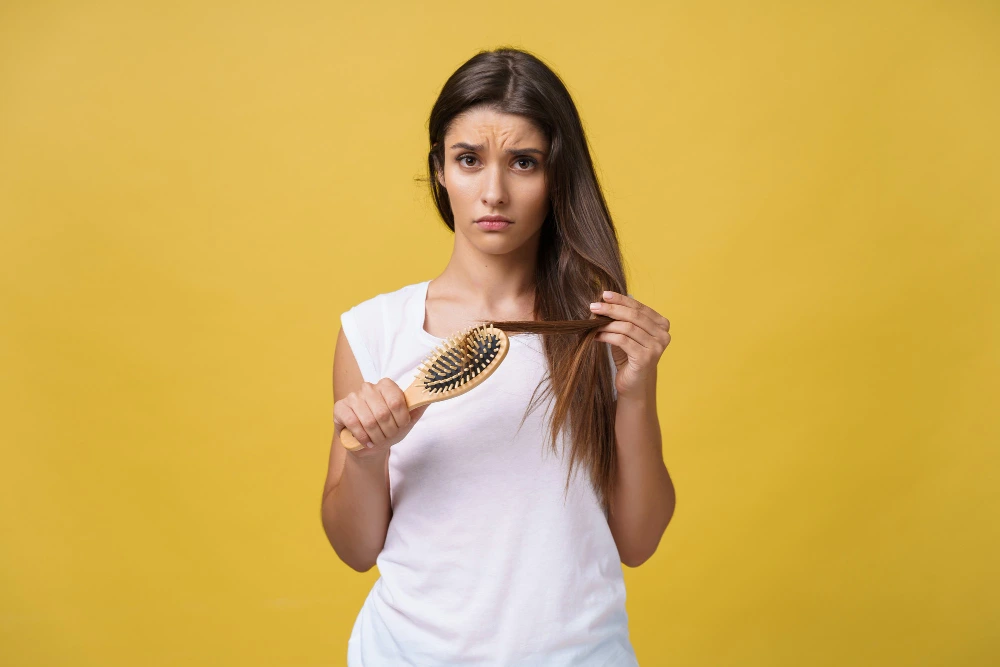
If you’ve noticed more strands in the shower around October or again in late March/April, you’re not imagining it. Many people experience seasonal hair shedding—a predictable, temporary uptick in daily loss linked to hair-cycle timing and environmental shifts. The key is knowing what’s normal, how long it lasts, and when it’s a red flag for something else.
If this guide clarifies the ups and downs of seasonal hair shedding for you, please share it with a friend who’s worried about their brush—your share could spare them a lot of stress.
Quick Take: Normal Vs. Not-So-Normal
Normal: A bump in shedding for 4–8 weeks in early fall and sometimes spring, with hair volume stabilizing afterward.
Still normal: 50–100 hairs/day on average (some days more, some less).
Check-in time: If shedding is patchy, painful, or lasts >12 weeks, or if you see obvious thinning at the part/temples.
Action plan: Keep scalp calm, reduce mechanical breakage, and maintain nutrition; consider a clinic visit if the pattern looks atypical.
Related reading: Everyday hair care routine · Daily scalp care routine · Prevention Routine for Hair Loss · Lifestyle Triggers for Hair Loss
Why Seasonal Shedding Happens
Your hair grows in repeating cycles—anagen (growth), catagen (transition), telogen (resting), and exogen (shedding). A small shift in the proportion of hairs entering telogen at the same time can create a seasonal telogen effluvium, where more hairs release within a tight time window.
What nudges the cycle?
- Photoperiod & environment: Daylight changes can influence hormonal signaling and hair-cycle timing.
- Inflammation & scalp health: Cooler, drier air in fall or pollen/irritants in spring may stress the scalp barrier.
- Behavior changes: Seasonal styling habits (more heat tools in colder months; more UV/chlorine outdoors in spring/summer) can increase breakage, which people often mistake for shedding.
Smart Tip: If shedding is higher and your scalp is flaky or itchy, treat the scalp first.
See: Everyday Hair Care Routine To Prevent Hair Loss
Our shampoo guide: Best Shmapoo For Thinning Hair
Fall Vs. Spring: What’s Different?
Fall Peak (often Sept–Nov)
- Many report the most noticeable seasonal hair shedding here.
- Air becomes drier → more static and friction; hats and scarves add mechanical wear.
- Solution focus: anti-dandruff rotation (if flakes), gentle detangling, and silicone-light leave-ins to reduce friction.
Spring Peak (often Mar–May)
- Often milder and shorter than fall, but still noticeable for some.
- Pollen and weather shifts can irritate sensitive scalps; outdoor UV increases oxidative stress on exposed lengths.
- Solution focus: barrier-friendly scalp care, UV-smart habits (hat, shade), and bond-supporting conditioners used judiciously.
Related reading: Hair Coloring: Breakage Vs. True Hair Loss and Stress And Lifestyle Triggers Of Hair Loss
What’s Normal Shedding Volume?
- Baseline: Roughly 50–100 hairs/day, with day-to-day fluctuation. On wash days, you may see more because shed hairs release at once.
- Seasonal bump: A temporary increase for 4–8 weeks (sometimes up to 12), then a return to baseline. You shouldn’t see widening parts or clearly thinner ponytails after it resolves.
Not normal: Rapid thinning at the part or temples, patchy bald spots, scalp pain, thick crusting, or shedding that continues beyond 3 months without signs of slowing.
Build A Seasonal Shedding Plan (4–8 Weeks)
1) Calm The Scalp
- Rotate an anti-dandruff active 2–3×/week if flakes/itch are present (ketoconazole, zinc pyrithione, piroctone olamine).
- Keep contact time 3–5 minutes before rinsing.
- On off-days, use a gentle cleanser and avoid heavy fragrance on the scalp.
Related reading: Everyday Hair Care Routine To Prevent Hair Loss
2) Reduce Breakage (So You Don’t Confuse It With Shedding)
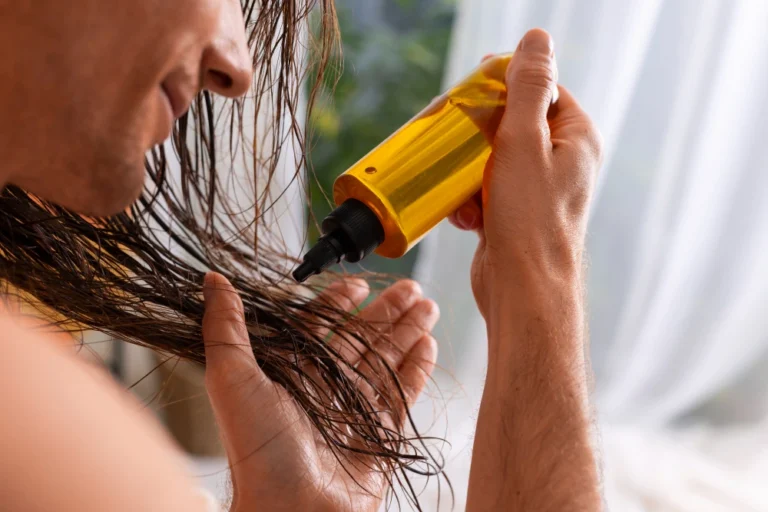
- Condition ear-down (lengths only) with lightweight humectants + modern silicones for slip.
- Switch to spray leave-ins if hair is fine/flat.
- Dry with a microfiber towel; detangle from ends up with a wide-tooth comb.
- Use the lowest effective heat and minimal passes when styling.
Related reading: Heat Styling Without Breakage: A Practical Guide and Conditioners & Leave-ins: What Helps, What Hurts
3) Cover Nutrition & Health Basics
- Ensure adequate protein, iron, vitamin D, B12, and zinc through diet or guided supplementation.
- Review thyroid status if fatigue, cold intolerance, or brittle hair accompany shedding.
- Check recent medication changes—certain drugs can trigger telogen effluvium.
Related reading: Medications That Cause Hair Shedding (Telogen Effluvium) · Vitamin Deficiency & Hair Loss (Iron, D, B12, Zinc) · Thyroid And Hair Loss: What To Test
4) Track, Don’t Panic
- Use the same brush and washing schedule; compare week to week (not day to day).
- Photograph your part and temples every 2–4 weeks in consistent lighting.
- If the trend is clearly worsening after 10–12 weeks, get a professional evaluation.
Seasonal Shedding Vs. Other Hair Loss Patterns
Diffuse Seasonal Shedding
- Even loss from all over the scalp; ponytail diameter feels the same after the period ends.
- Part width remains stable long-term.
Female Pattern Hair Loss (FPHL) / Male Pattern Hair Loss (MPHL)
- Gradual miniaturization with widening part (FPHL) or receding/hairline thinning (MPHL).
- Seasonal changes can overlay these, but baseline density continues to decline without treatment.
Related reading: How Genetics Influence Hair Loss and Female Pattern Hair Loss Vs. Diffuse Thinning
Postpartum Or Illness-Triggered Effluvium
- Delayed shedding 2–4 months after childbirth, fever, surgery, or major stressor.
- More dramatic but still temporary for most.
Related reading: Postpartum Hair Loss Vs. Androgenetic Alopecia
When To See A Dermatologist
- Shedding lasts >12 weeks with no improvement.
- You see patches, severe scalp symptoms, or obvious widening of the part.
- There’s a suspected trigger (new medication, crash diet, endocrine issues).
- You want to discuss medical therapies (minoxidil, antiandrogens) or procedures (PRP, transplant).
Considering next steps? Start here:
- How To Choose The Best Hair Transplant Clinic
- Hair Transplant Recovery Timeline
- Hair Transplant Cost Factors
See Top-Rated Clinics
Prefer a diagnosis-first approach? Browse neutral, vetted clinics that manage genetic hair loss with medical therapy (and surgery if needed). Filter by credentials, outcomes, and follow-up care. → See top-rated clinics
Hair Enhancement Resources & Guides
- Everyday Hair Care Routine To Prevent Hair Loss
- Hair Loss Prevention Routine
- Microneedling For Hair Growth: How Often & Needle Size
- Stress And Lifestyle Triggers Of Hair Loss
FAQs About Seasonal Hair Shedding
The Takeaway
Most seasonal hair shedding is temporary and resolves in 4–8 weeks. Focus on scalp health, gentle detangling, minimal heat, and steady nutrition. If shedding persists or your density clearly declines, get a diagnosis so you can act early. See top-rated clinics here if you want a medical opinion—and if this article helped, please share it with someone who’s counting hairs in the drain.
If this article helped, please share it with someone worried about hair loss—your share could be the nudge they need to choose the right next step.
References
- American Academy of Dermatology — Hair loss: Overview (pattern loss vs. effluvium basics)
- American Academy of Dermatology — Telogen effluvium (diffuse shedding guidance)
- Harvard Health Publishing — Hair loss: When to worry and how to treat (general thresholds for evaluation)
- International Society of Hair Restoration Surgery (ISHRS) — Patient Education Hub
- ISHRS — Treatments For Hair Loss (Overview)
Medical Disclaimer: The content on hairimplants.net is for informational purposes only and should not be considered medical advice. It does not replace a professional medical consultation, diagnosis, or treatment. Readers are encouraged to seek guidance from a qualified healthcare provider before making any decisions about hair restoration treatments. Hairimplants.net accepts no liability for actions taken based on the information provided.
Affiliate Disclosure: Hairimplants.net may contain affiliate links. If you click a link and make a purchase, we may earn a small commission at no additional cost to you. This helps us keep our content free and research-based. Our editorial opinions are independent and not influenced by partnerships. We do not accept payment for favorable reviews or rankings. Links to medical sources are non-affiliate.