
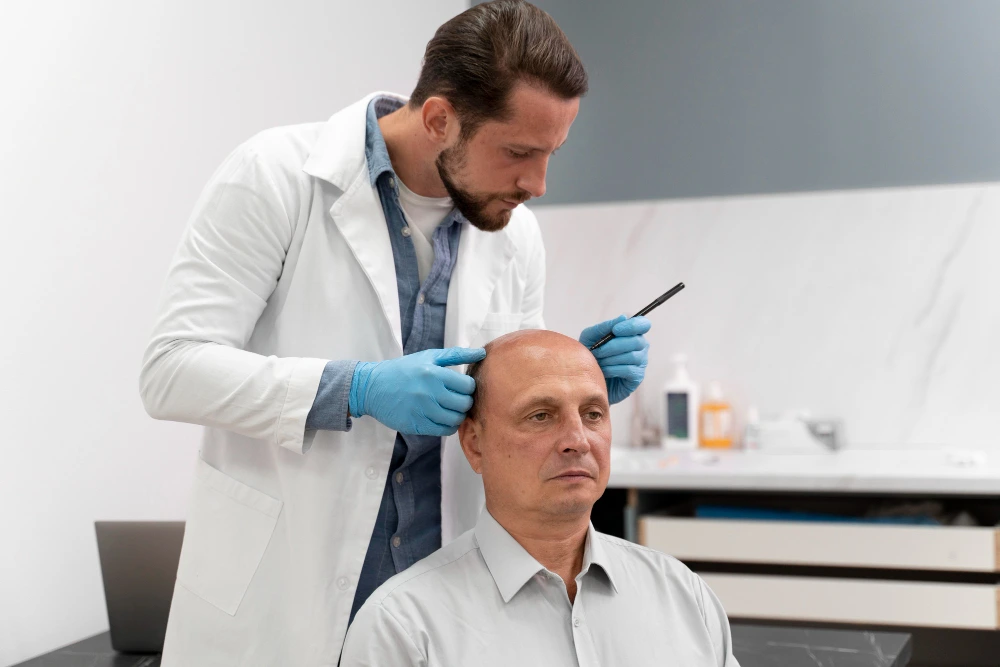
If you’re researching a procedure, start here. In the first 100 words we’ll explain why ISHRS and ABHRS hair transplant credentials are a powerful safety signal—and why technician-led setups raise avoidable risks. ISHRS warns that unlicensed technicians performing key surgical steps can jeopardize diagnosis, safety, and results; ABHRS certification, on the other hand, indicates hair-specific training and exams beyond general practice.
Know a friend eyeing a bargain abroad? Share this before they pay a deposit.
Quick Take
Why it matters: Board-certified, surgeon-led teams (think ISHRS/ABHRS credentials) consistently outclass technician-led setups in safety, planning, and outcomes.
Non-negotiables: The operating surgeon designs your plan and performs (or directly supervises) extractions and recipient-site incisions.
How to verify fast: Search ABHRS for certification, check ISHRS membership, confirm the clinic’s legal authorization/regulator listing, and get the surgeon’s name on your consent.
Proof over promises: Ask for case-matched before/afters with consistent lighting/angles and 12–24+ months follow-up—avoid “unlimited grafts” marketing.
Clinic reality check: Reasonable daily case volume, sterile workflow, written aftercare, and a clear complication pathway are green flags; pressure sales and vague roles are red flags.
Bottom line: If they won’t show credentials or specify who does what, walk away. Choose ISHRS/ABHRS hair transplant teams that protect your donor for life.
Related reading: Before You Choose a Hair Transplant Surgeon • FUE vs FUT Hair Transplant • Hair Transplant Recovery Timeline • How to choose the best hair transplant clinic
What “Board-Certified” Means In Hair Restoration
Not all “certifications” are equal. In hair surgery, ABHRS (American Board of Hair Restoration Surgery) is the specialty board that examines surgeons on hair-specific knowledge and technique via written/oral exams and strict case requirements. Membership in ISHRS supports education and ethical guidelines across the field. Used together (ISHRS community + ABHRS board certification), these credentials help you identify surgeon-led care rather than production-line operations.
Quick Definitions
- ISHRS: Global medical society for hair restoration—education, ethics, consumer safety alerts.
- ABHRS: Hair-specific board with eligibility criteria and exams to certify surgeon competence.
Check the surgeon’s credentials here: ABHRS search · ISHRS directory
Why Technician-Led Clinics Are Risky
When unlicensed or improperly supervised technicians take over critical steps (planning, harvesting, making recipient site incisions), patients face elevated risks: misdiagnosis of hair disorders, inappropriate candidacy, unnecessary surgery, and complications. ISHRS explicitly alerts patients about this practice and its safety implications.
Professional bodies in the UK echo the same principle: surgeons should not delegate incision-making or FUE harvesting to non-physicians.
Red flags you can spot fast
- “Unlimited grafts” promises or one-day mega-sessions for everyone.
- No direct consult with the operating surgeon; you only meet a “coordinator.”
- Vague answers about who makes incisions and who harvests grafts.
- Photos that aren’t case-matched (different lighting/angles, no long-term follow-up).
- Heavy pressure to book now “to lock the discount.”
Outcomes: Surgeon-Led Planning Protects Your Donor
A board-certified, surgeon-led team will:
- Diagnose the cause of hair loss and confirm you’re a candidate.
- Map a long-term donor strategy (FUE, FUT, or hybrid) rather than chasing today’s highest graft count.
- Limit daily case volume so the surgeon maintains meaningful oversight.
- Provide case-matched before/afters with 12–24+ months follow-up.
Aftercare: What Good Clinics Do
Quality clinics give you a written aftercare plan (washing, activity limits, meds, check-ins). As a general timeline reference, UK NHS guidance describes typical milestones (bandage removal, first gentle washes, early shed, growth starting around month 4, and maturation by 10–18 months). Use this as a sanity check against any clinic’s promises.
How To Verify A Surgeon (10-Minute Checklist)
- Name + role: Get the operating surgeon’s full name in writing; confirm who performs extractions and incisions.
- ABHRS status: Search the ABHRS site for certification (and note active vs. lapsed)
- Medical license & discipline: Check your country’s register; in the US, use FSMB DocInfo for licensure/board actions.
- Society membership: Look up ISHRS membership, which supports education and ethical standards.
- Facility legitimacy: Verify the clinic’s legal authorization (e.g., Health Tourism lists in Turkey) or regulator (e.g., CQC in England).
- Case evidence: Ask for comparable cases (hair type/pattern/age) with consistent angles and multi-year follow-up.
- Written plan: Demand a plan covering technique, graft estimate, anesthesia, team roles, risks, and aftercare.
Smart Tip — verify before you pay:
Ask for the operating surgeon’s name and who performs extractions and incisions—in writing. Cross-check ABHRS certification, ISHRS membership, and the clinic’s regulatory listing. If any claim can’t be verified on an official directory, don’t pay a deposit.
Sample Email (Copy/Paste)
Subject: Pre-booking verification — hair transplant
Hello [Clinic],
• Who is the operating surgeon (full name)? Who performs extractions and recipient site incisions?
• Is the surgeon ABHRS-certified and a member of ISHRS? Please share links/certificates.
• Which regulator/accreditor is the facility registered with?
• May I see case-matched before/after results with 12–24 months follow-up?
• Please send a written surgical plan and itemized quote (including aftercare).
Thank you.
Travel Tips If You’re Going Abroad
- Buffer days: Stay for day-1/2 checks before flying.
- Insurance: Consider travel medical policies that include elective-procedure complications.
- Paperwork: Carry your operative note, medication list, and surgeon contacts.
- Expectations: Align aftercare timing with flight/activity limits (ask your surgeon to personalize). NHS timelines are a good general reference.
See Top-Rated Clinics
Prefer a diagnosis-first approach? Browse neutral, vetted clinics that manage genetic hair loss with medical therapy (and surgery if needed). Filter by credentials, outcomes, and follow-up care. → See top-rated clinics
Hair Enhancement Resources & Guides
- How to choose the best hair transplant clinic — practical screening steps before you book.
- Before you choose a hair transplant surgeon — questions to ask and red flags.
- Hair transplant cost comparison — typical price ranges and what drives costs.
- FUE vs FUT hair transplant — pros, cons, and donor-area strategy.
- Hair transplant recovery timeline — week-by-week healing and aftercare.
FAQ
Bottom Line
Choosing a board-certified, surgeon-led team isn’t a luxury—it’s the safest path to natural results and long-term donor preservation. Prioritize verifiable ISHRS/ABHRS hair transplant credentials, confirm who performs each surgical step, and walk away from “unlimited grafts” or no-surgeon consults. Your donor is finite; protect it.
Was this helpful? Share it to help someone avoid technician-led traps and choose a surgeon-led team.
References
- ISHRS — Beware of Unlicensed Technicians (patient safety alert).
- ABHRS — Certification (requirements and standards for diplomates).
- NHS — Hair Transplant Overview (timeline and general risks/aftercare). nhs.uk
- BAHRS / ISHRS — Guidance on Delegation (surgeons should not delegate incision-making to non-physicians).
- FSMB DocInfo — Verify Licensure & Discipline (doctor background checks in the US).
Medical Disclaimer: The content on hairimplants.net is for informational purposes only and should not be considered medical advice. It does not replace a professional medical consultation, diagnosis, or treatment. Readers are encouraged to seek guidance from a qualified healthcare provider before making any decisions about hair restoration treatments. Hairimplants.net accepts no liability for actions taken based on the information provided.
Affiliate Disclosure: Hairimplants.net may contain affiliate links. If you click a link and make a purchase, we may earn a small commission at no additional cost to you. This helps us keep our content free and research-based. Our editorial opinions are independent and not influenced by partnerships. We do not accept payment for favorable reviews or rankings. Links to medical sources are non-affiliate.


